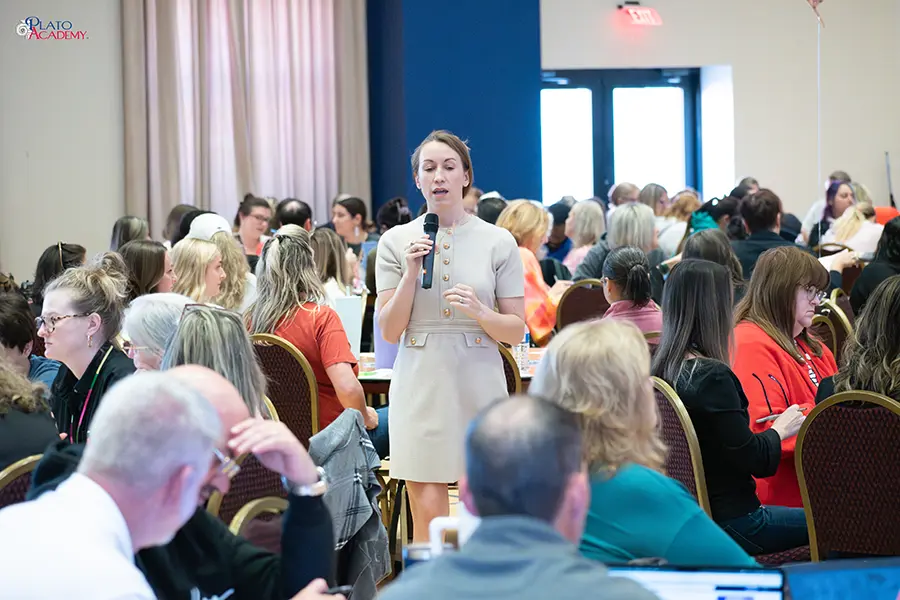
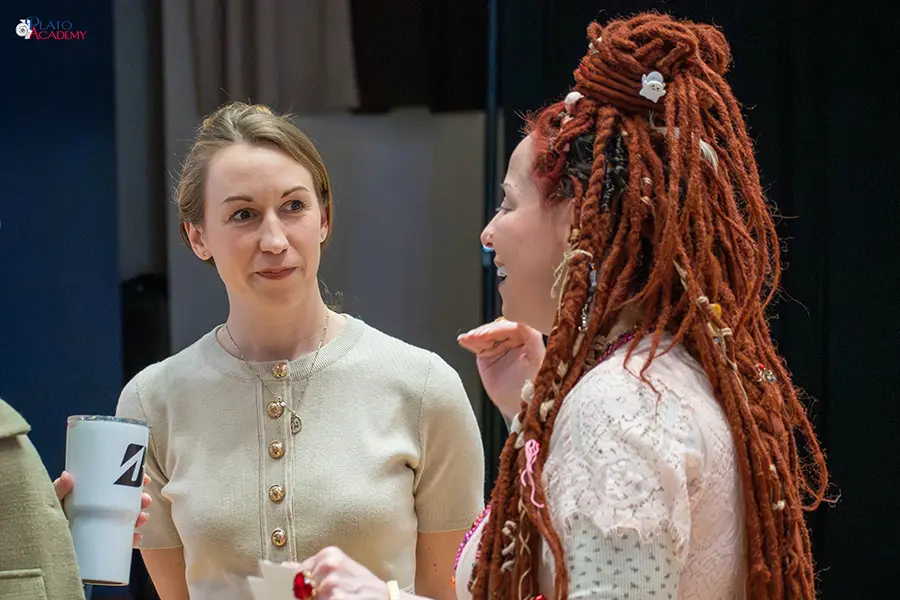
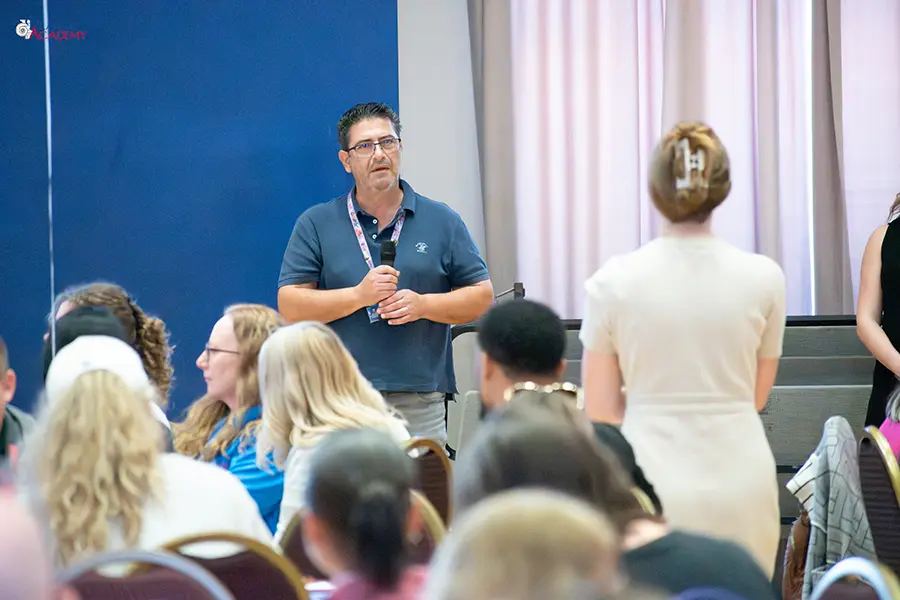
CLEARWATER FL – On February 13, faculty from every Plato Academy campus set aside a full school day to sit together, think carefully, and sharpen the very craft that defines their classrooms. The all-staff professional development session, held at Plato Academy Clearwater, counted as one of the two required PD days for the academic year.
The day was a deliberate return to the philosophical foundation of teaching: the Socratic Method.
Learning from the Source
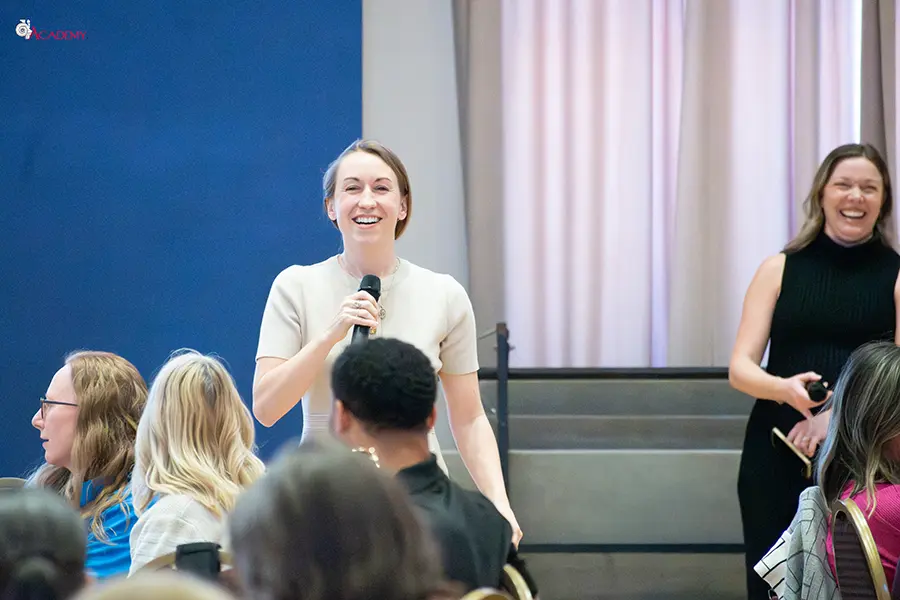
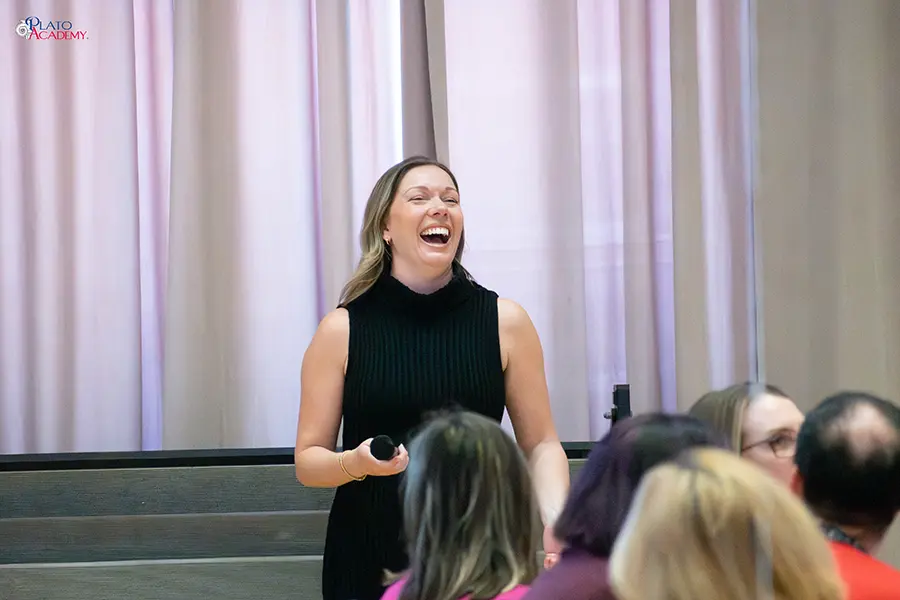
The session was led by Dr. Lily Abadal of the University of South Florida’s Philosophy Department, accompanied by her team. Dr. Abadal brought a structured yet dynamic approach to the day, moving teachers through the theory, the practice, and the real-world classroom application of Socratic dialogue, all in a single sitting.
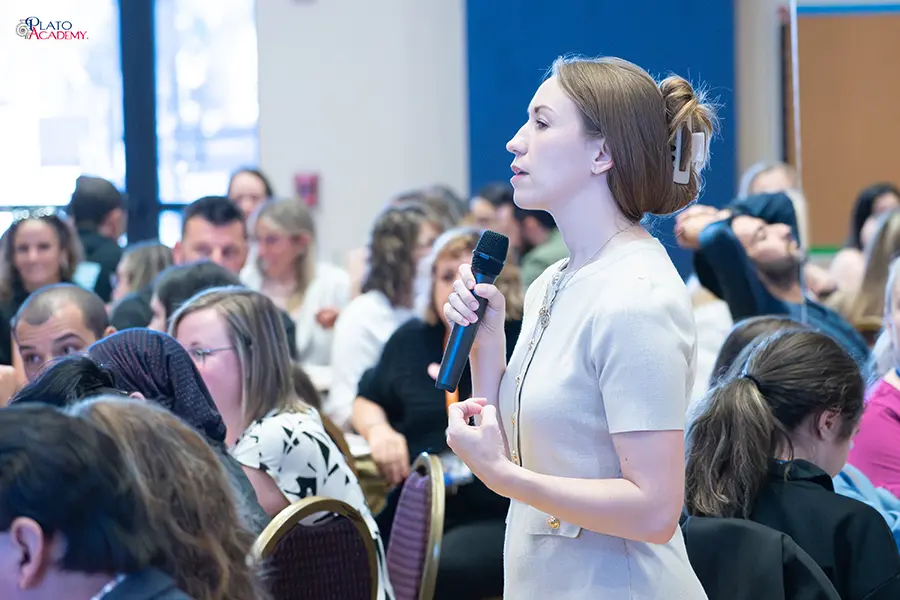
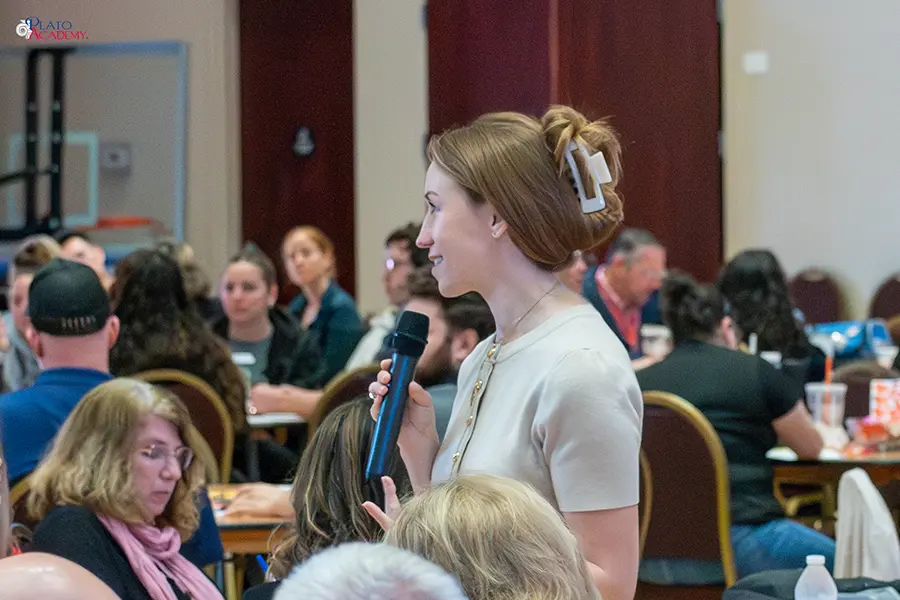
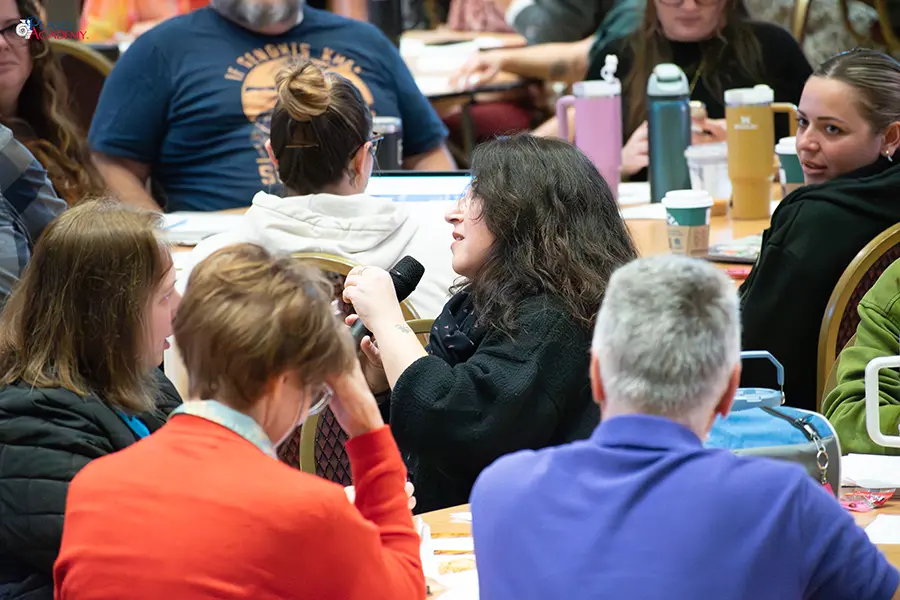
The morning opened with a deep dive into the principles of the Socratic Method, giving teachers the intellectual grounding to understand not just how to run a Socratic seminar, but why the method works and what it demands of both teacher and student. That foundation was quickly put to the test with a live demonstration of a debate. Dr. Abadal chose a deceptively simple question as her subject: “What is happiness?” What unfolded was anything but simple. The discussion pulled teachers into exactly the kind of layered, sometimes uncomfortable inquiry that the Socratic Method is built for, and it gave faculty a firsthand look at how a single well-chosen question can carry an entire room.
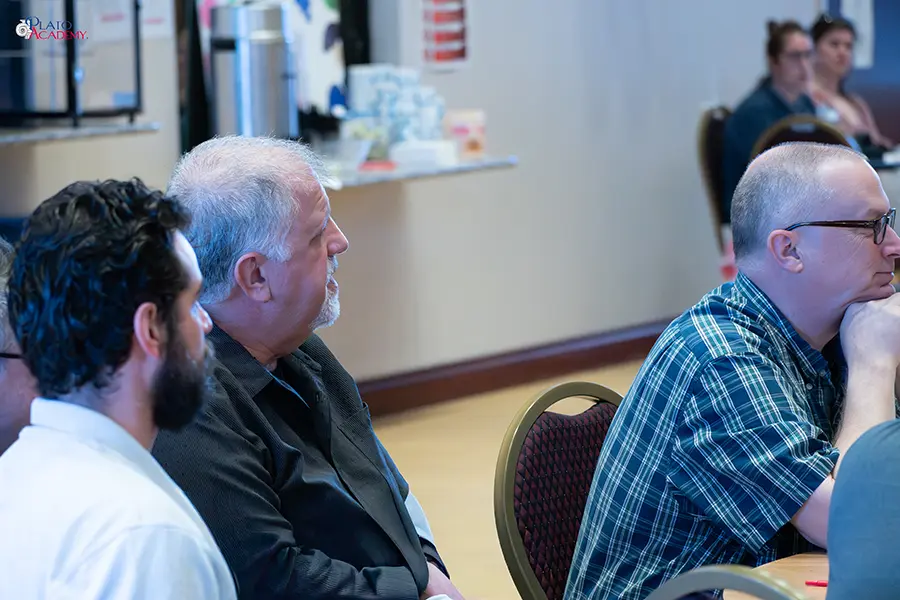
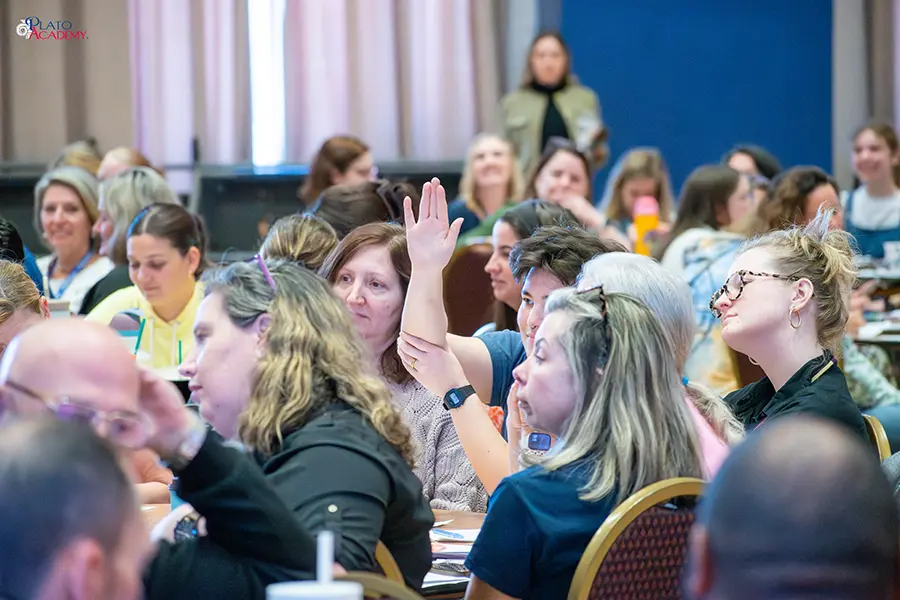
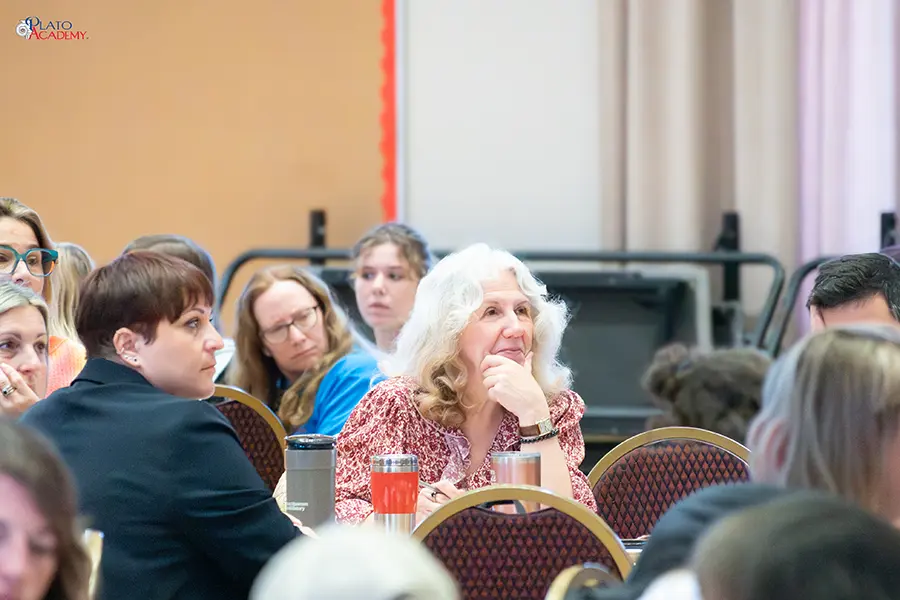
The question resisted easy answers, and that was precisely the point. Opinions surfaced, were challenged, refined, and challenged again. The room that had been full of educators watching a technique quickly became a room full of thinkers genuinely wrestling with an idea. It was a vivid reminder that the Socratic Method does not need a complicated prompt to generate serious thinking, and that the right question, asked well, can move a group of adults just as powerfully as it moves a classroom of students.
Opinions surfaced, were challenged, refined, and challenged again.
After the break, the conversation turned practical. Sessions on the conditions necessary for a successful Socratic seminar and a guided tour of what Dr. Abadal calls “the Socratic Toolkit” gave teachers a concrete set of strategies they could bring back to their classrooms the following Monday.
Thinking Together, Building Together
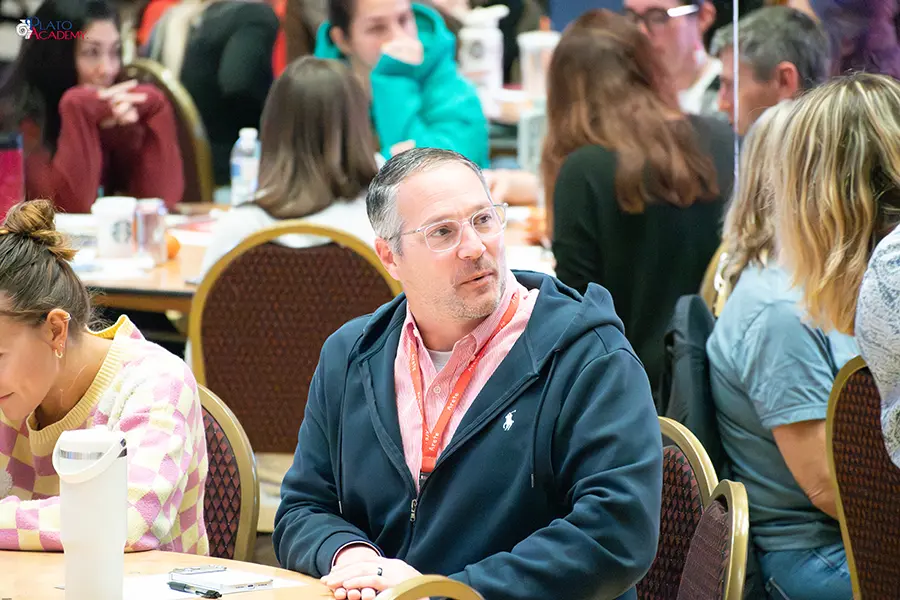
The afternoon shifted the energy from instruction to creation. Following lunch, teachers were placed into assigned breakout groups and given a focused challenge: design their own Socratic activity, a display of professional design, requiring teachers to translate everything from the morning into a coherent, classroom-ready learning experience.
Groups then came together for a sharing session, presenting their work and receiving feedback from colleagues across campuses. The day wrapped up with an open Q&A on real classroom roadblocks, followed by a closing reflection that gave every teacher space to process what the day had meant for their practice.
Why This Day Matters
At Plato Academy, the Socratic Method is the core of how learning happens. The school’s classical education model places emphasis on how students think rather than simply what they think, and that distinction demands teachers who are themselves skilled at facilitating inquiry, sustaining intellectual rigor, and modeling civil, thoughtful discourse.
This professional development day was a direct investment in that standard. By bringing every faculty member together, the school reinforced a shared language and a shared expectation: that every Plato Academy classroom is a place where curiosity is taken seriously and where questions drive the learning forward.