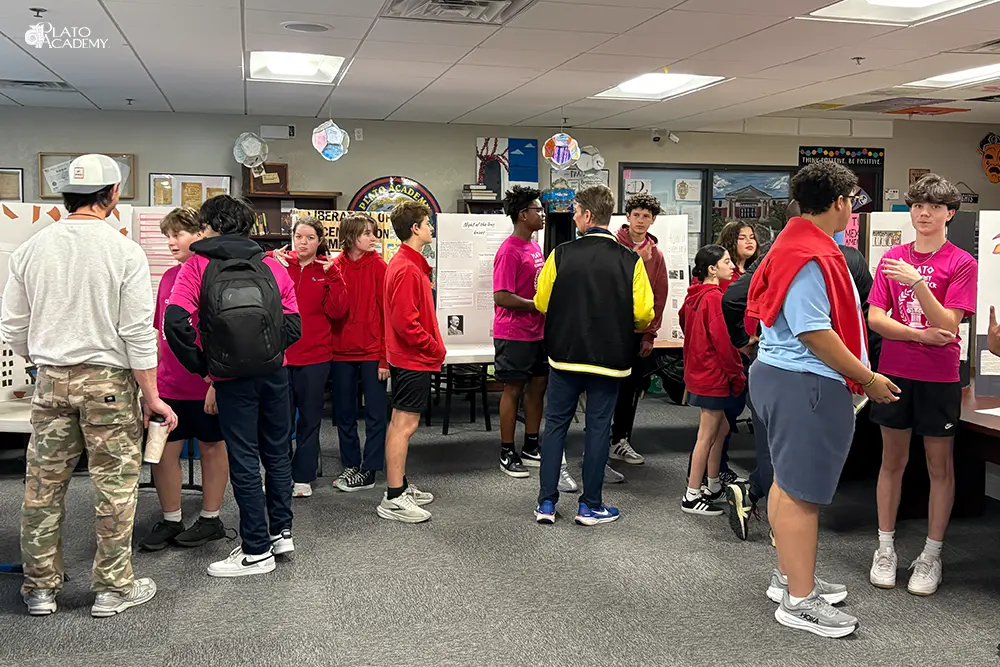
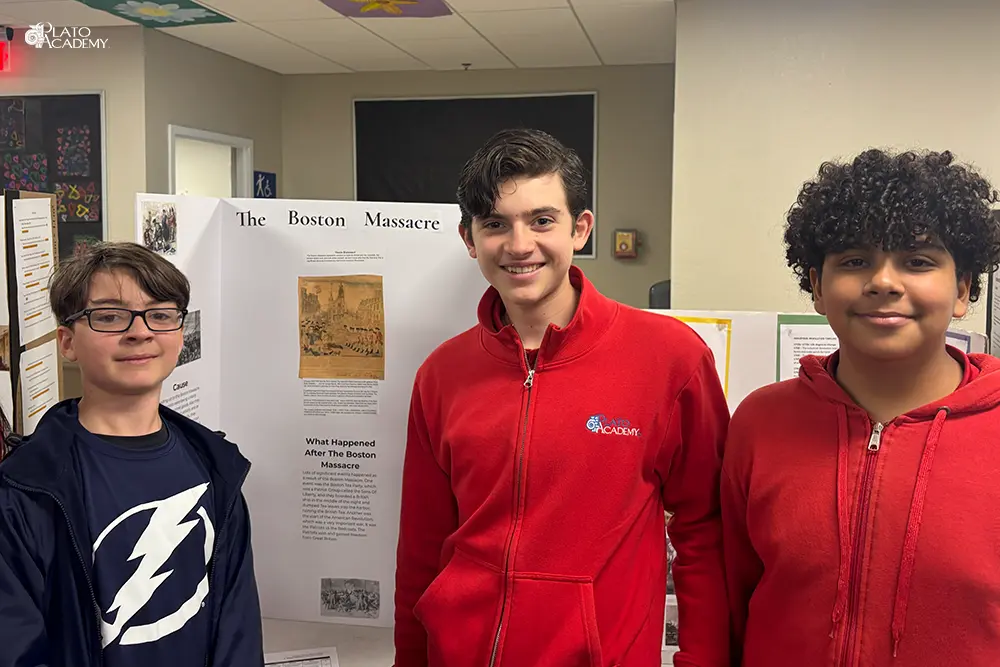
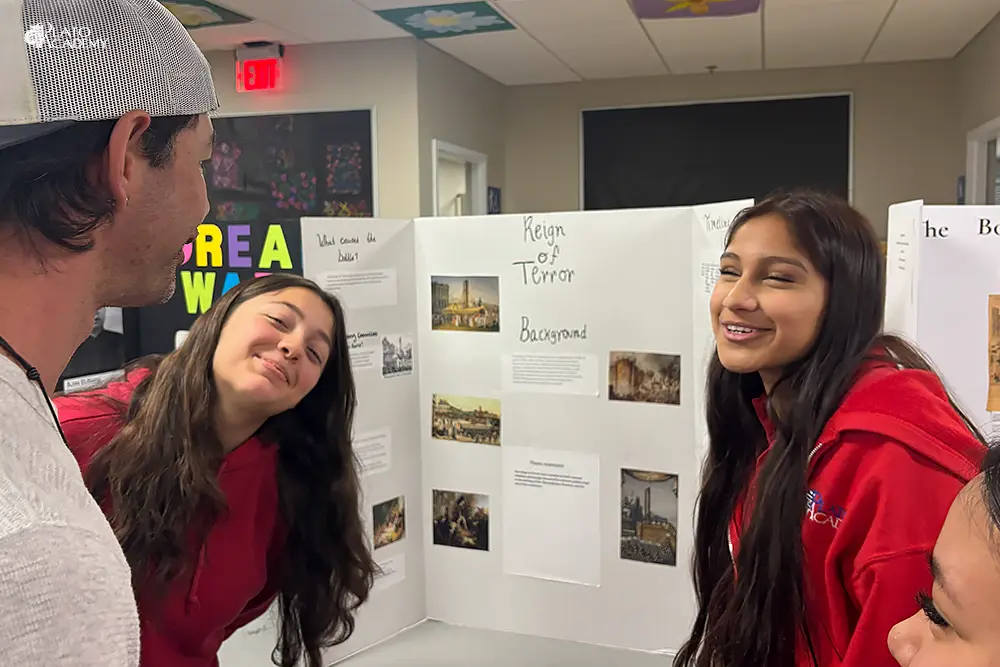
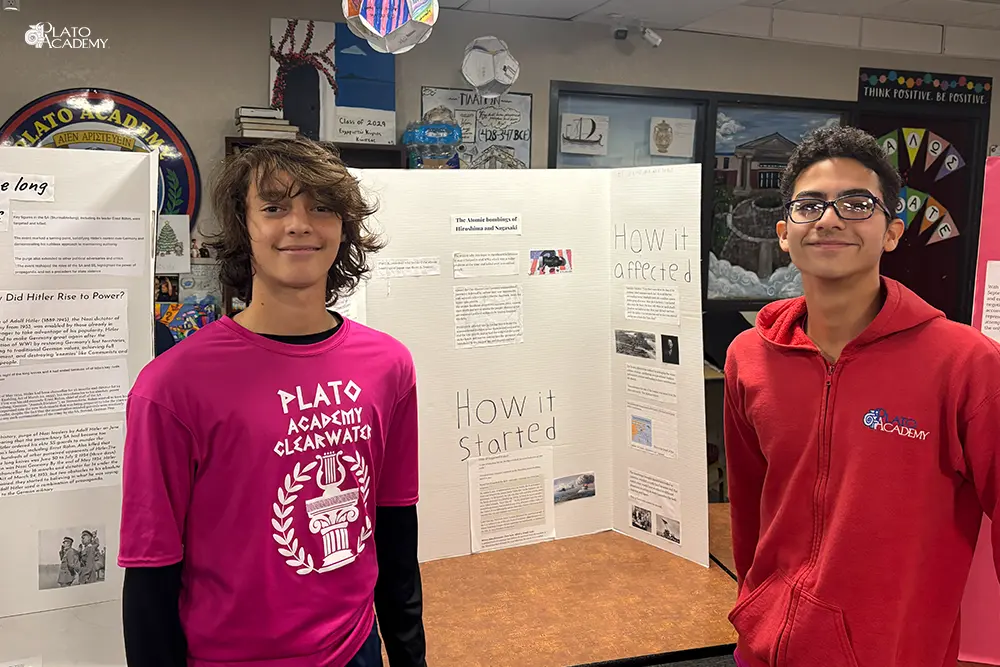
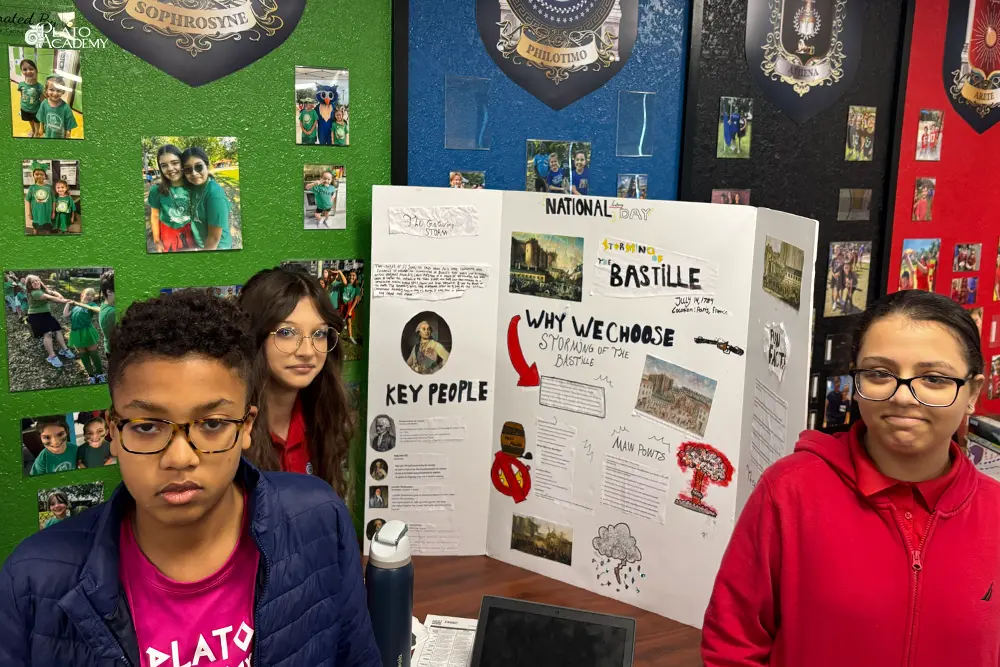
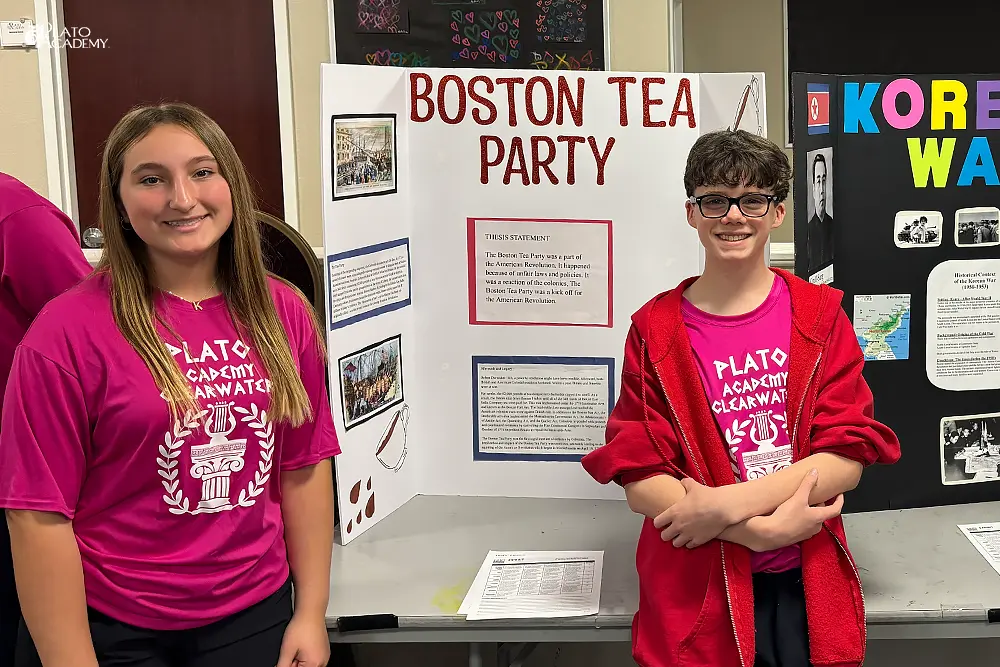
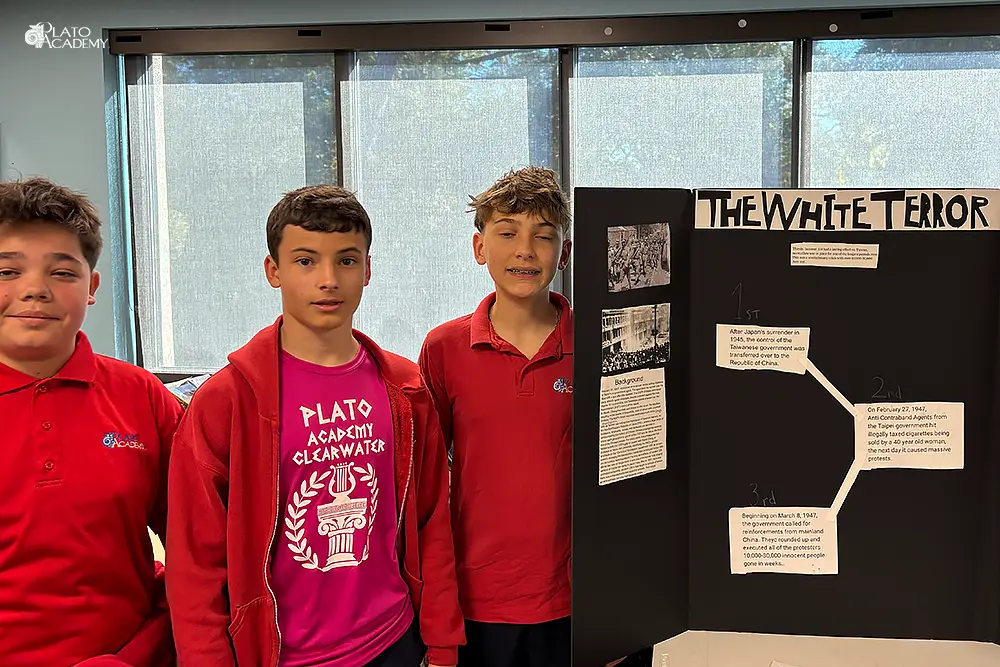
Eighth graders at Plato Academy Clearwater demonstrated remarkable historical scholarship during the school’s National History Day fair last Friday, analyzing pivotal moments of revolution, reaction, and reform through meticulously researched exhibits.
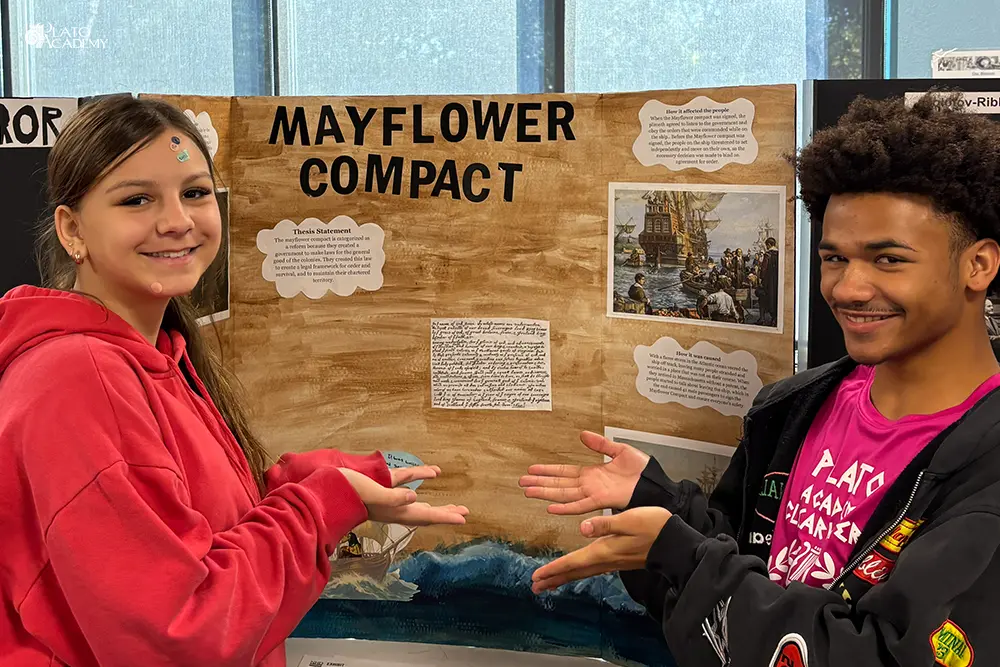
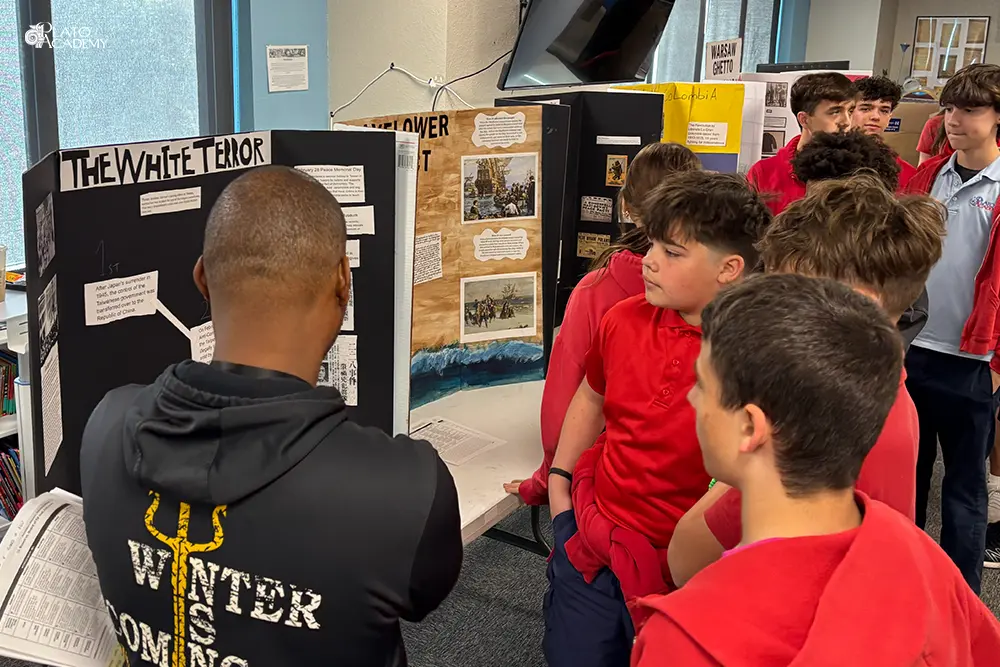
The February 6 competition, coordinated by social studies teachers Mr. Martz and Mrs. Keller, challenged students to examine transformative periods in history through the lens of this year’s theme: “Revolution, Reaction, Reform in History.” Student historians presented their findings to judges drawn from the school community, defending their research and interpretations in a format that mirrors authentic academic discourse.
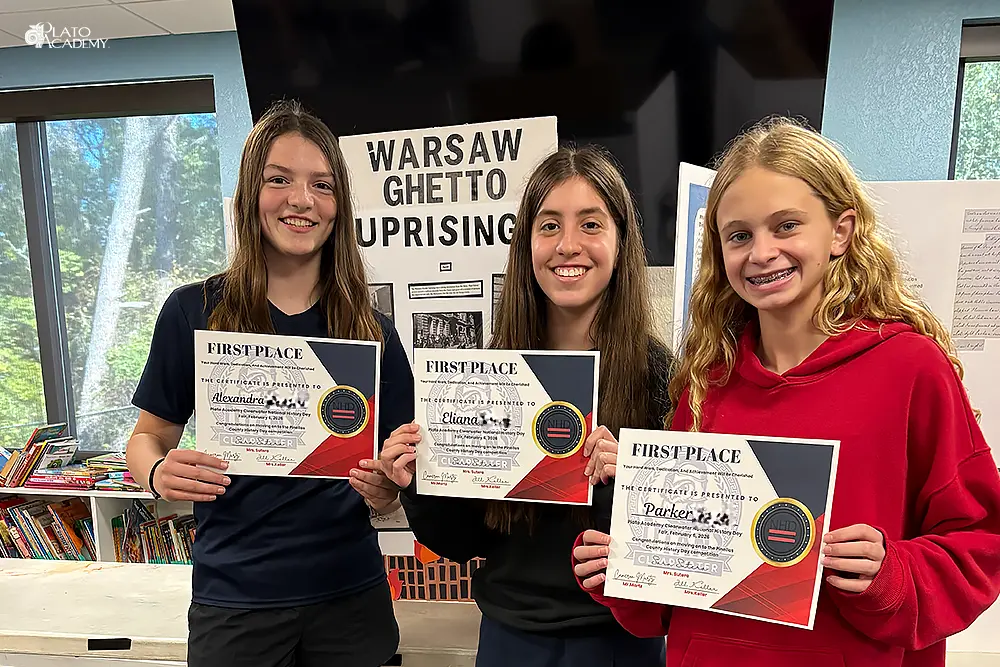
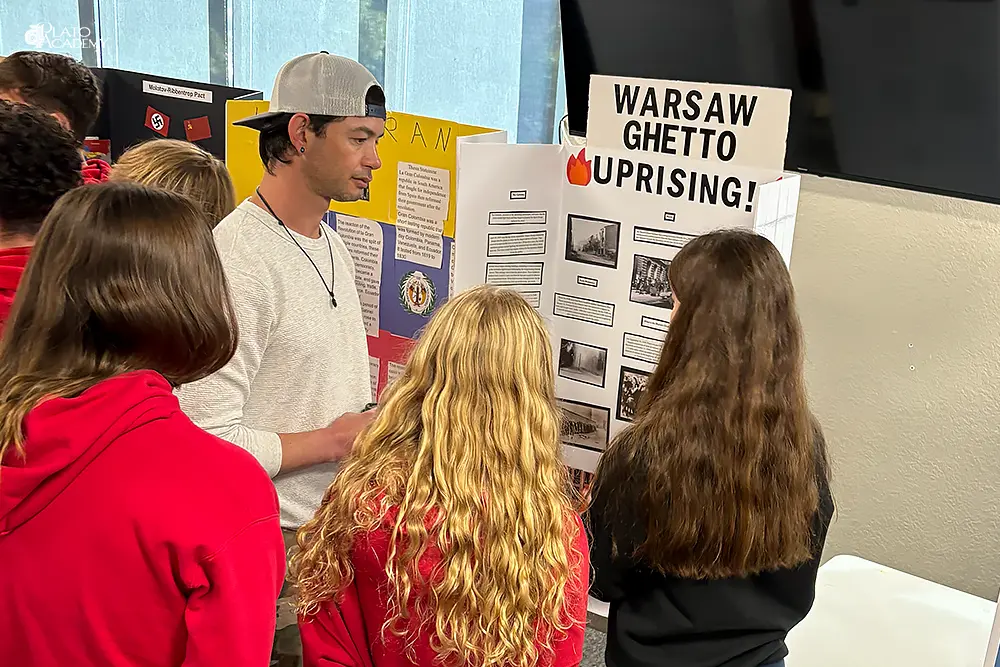
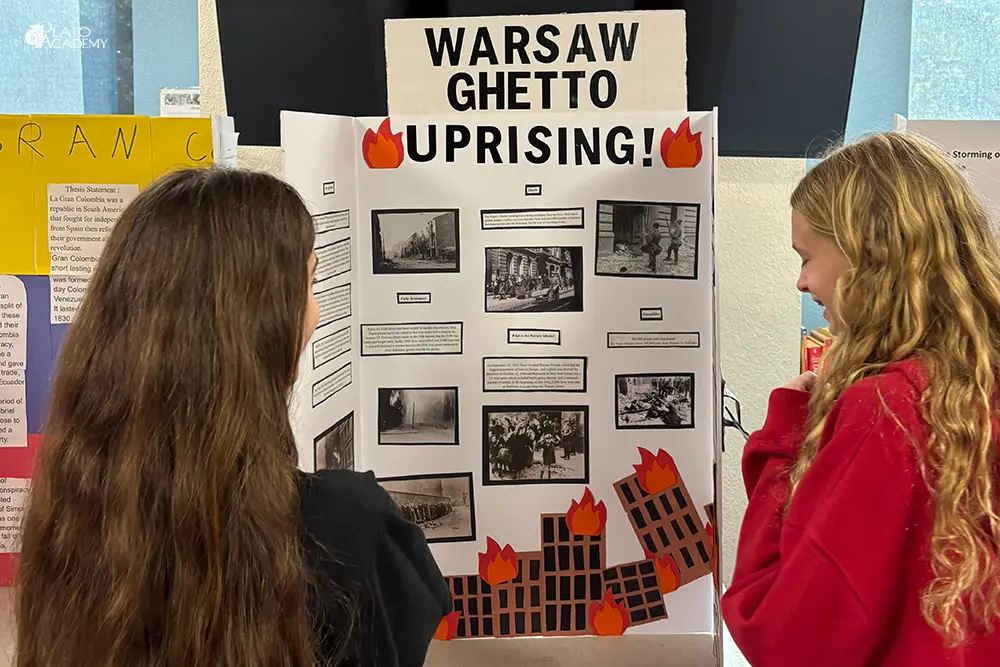
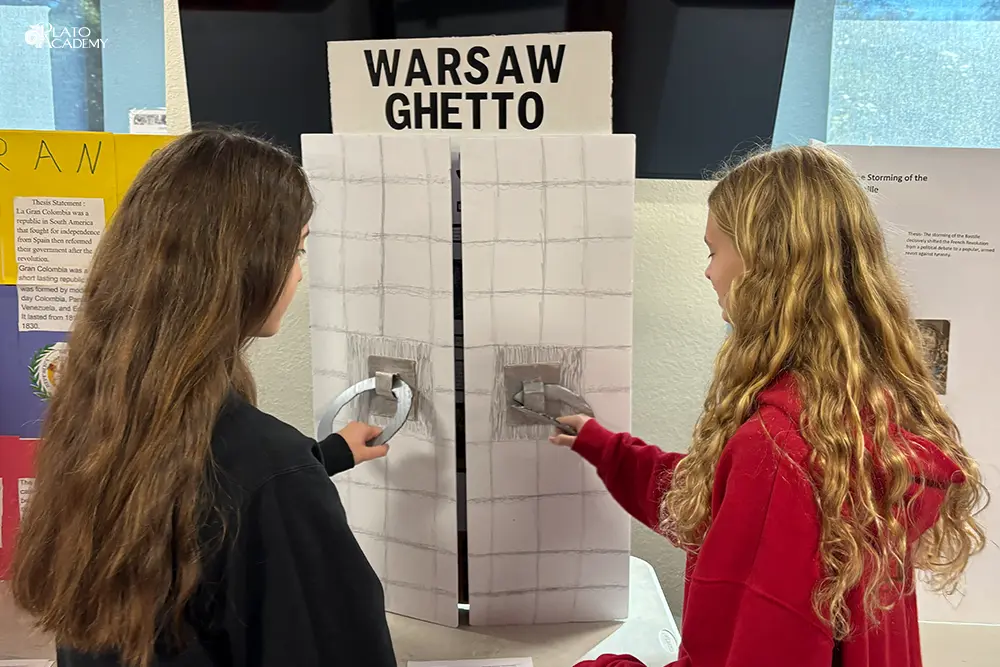
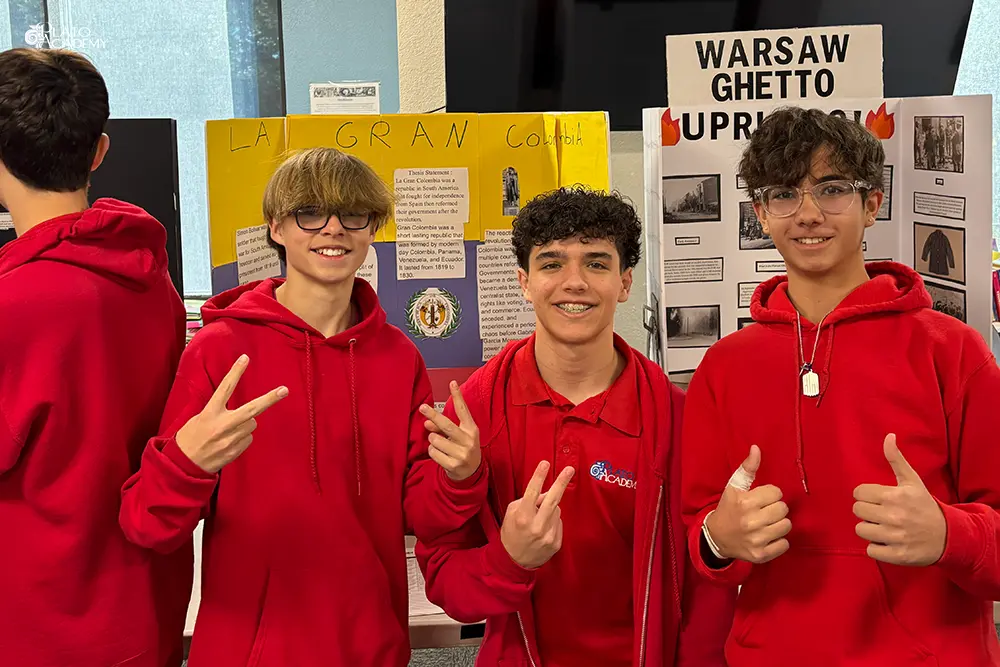
Taking first place with their examination of the Warsaw Ghetto Uprising were Eliana L, Parker J, and Alex S. Their exhibit explored one of the most significant acts of Jewish resistance during the Holocaust, when residents of the Warsaw Ghetto staged an armed revolt against Nazi deportation efforts in 1943.
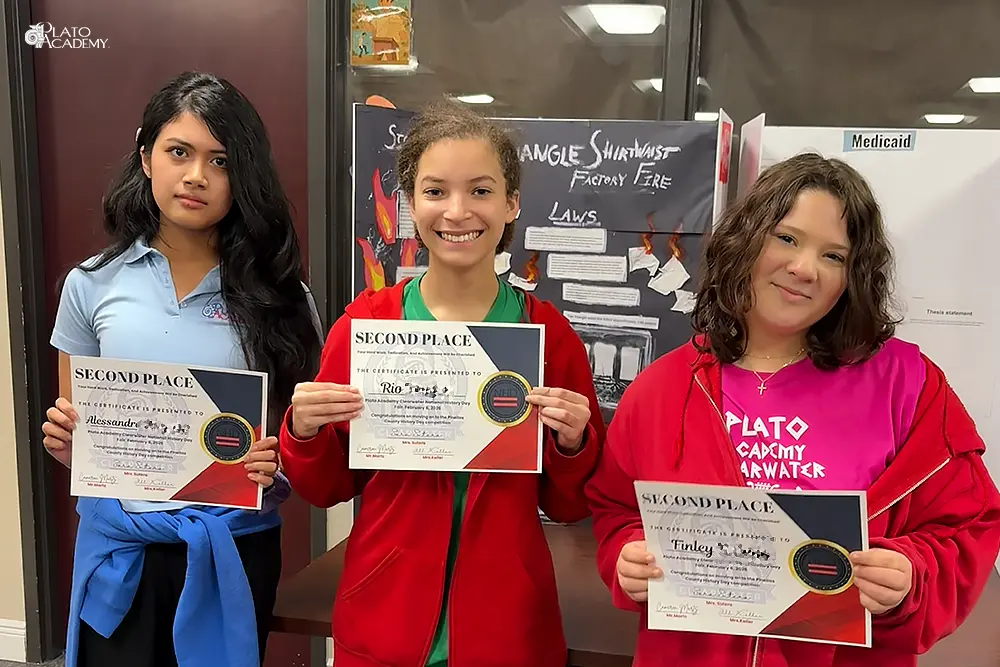
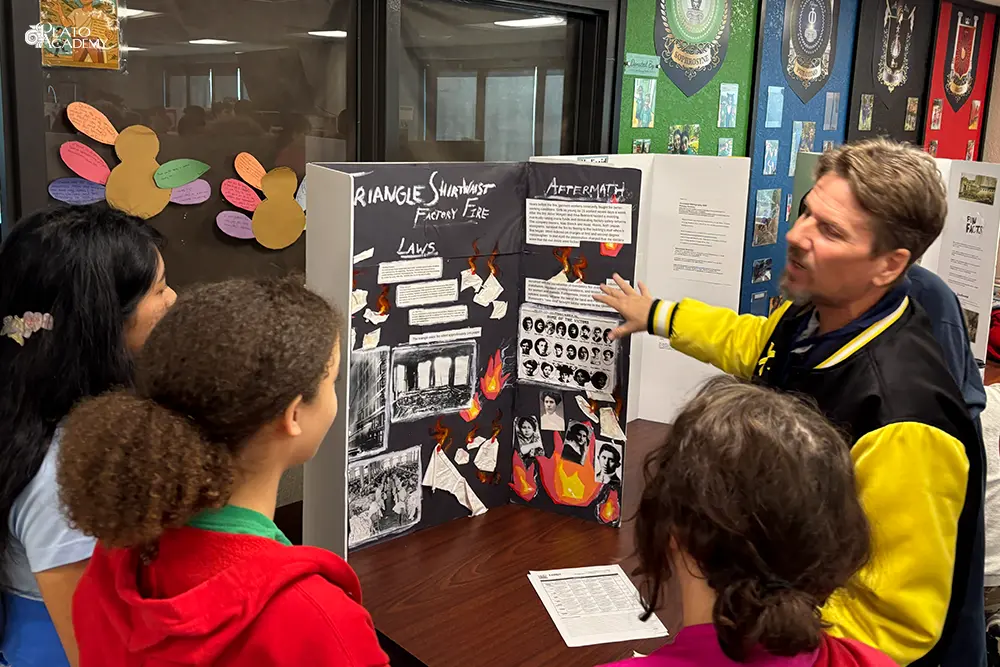
The second-place team of Rio Y, Zoey T, and Finley R investigated the 1911 Triangle Shirtwaist Factory Fire, a tragedy that killed 146 garment workers and catalyzed major reforms in workplace safety regulations and labor law.
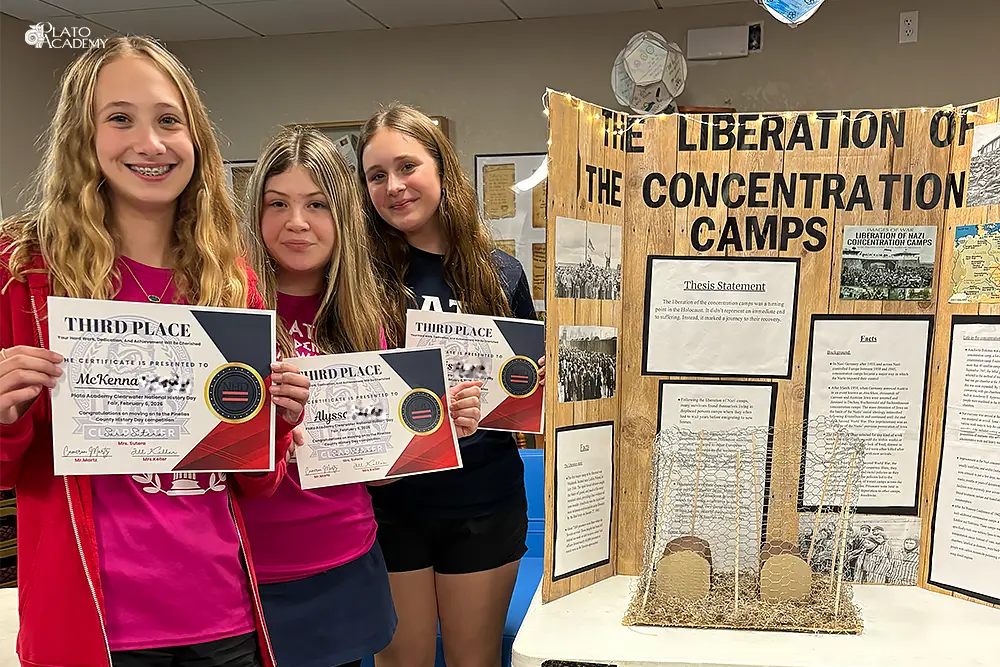
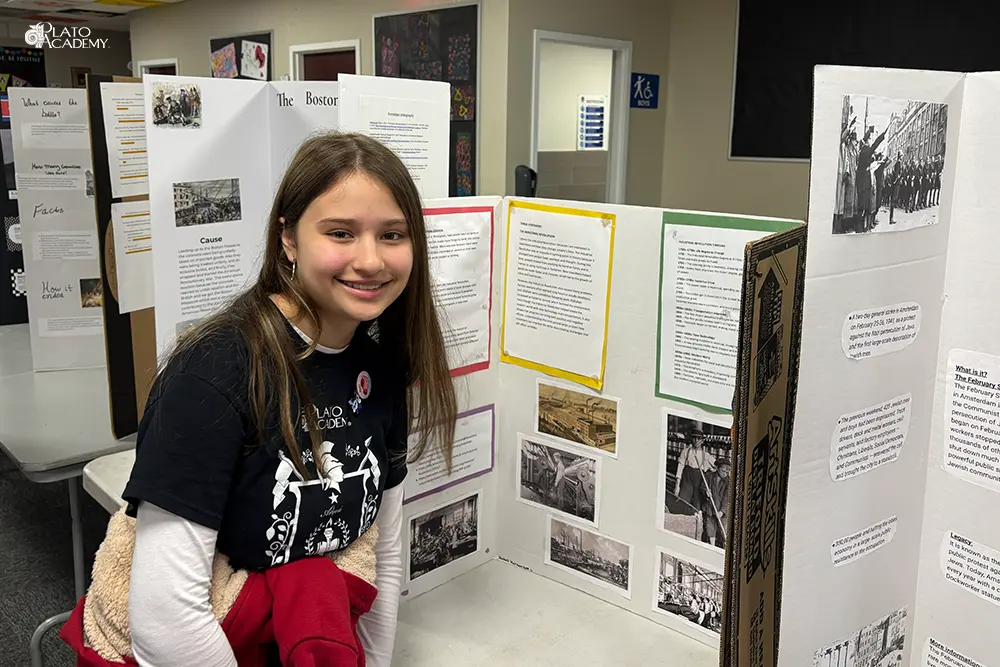
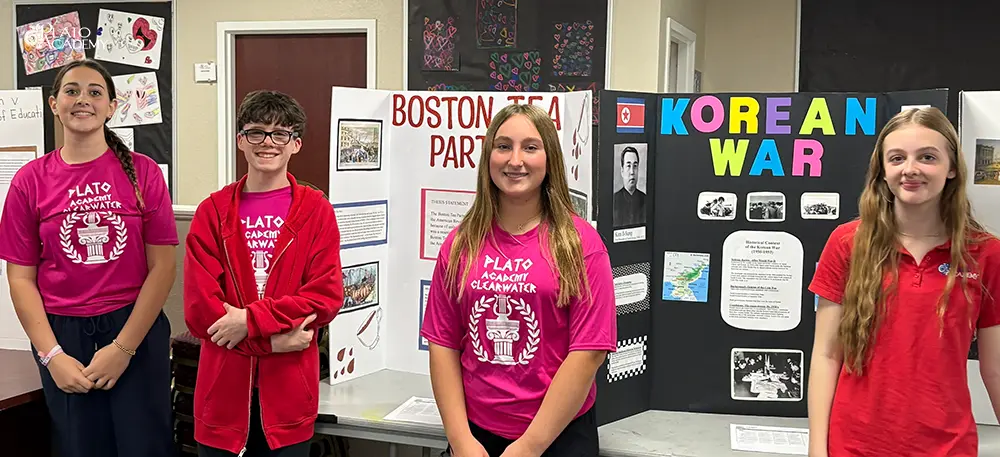
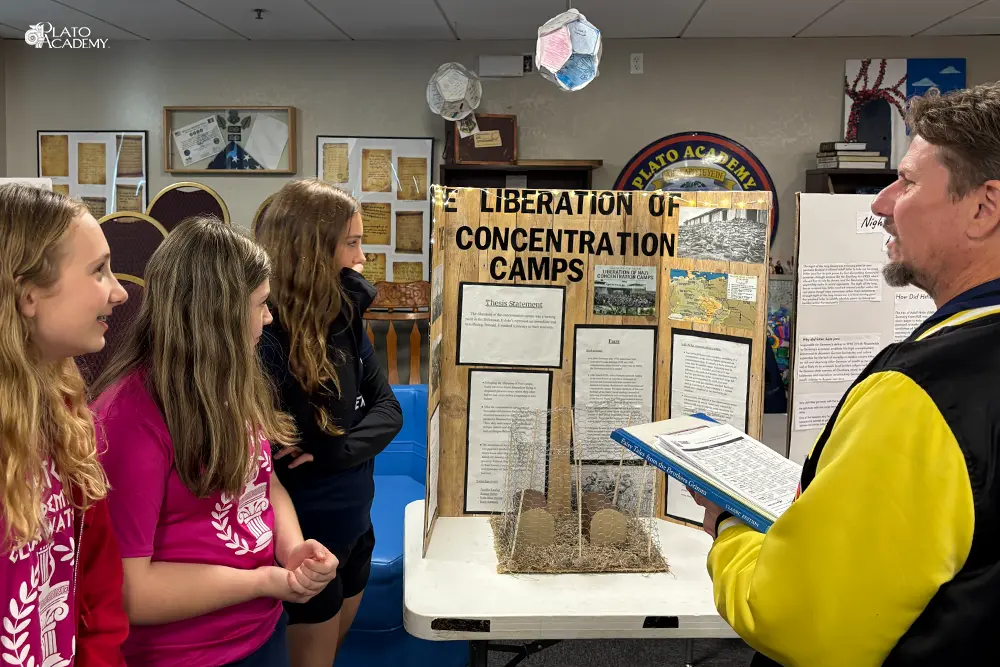
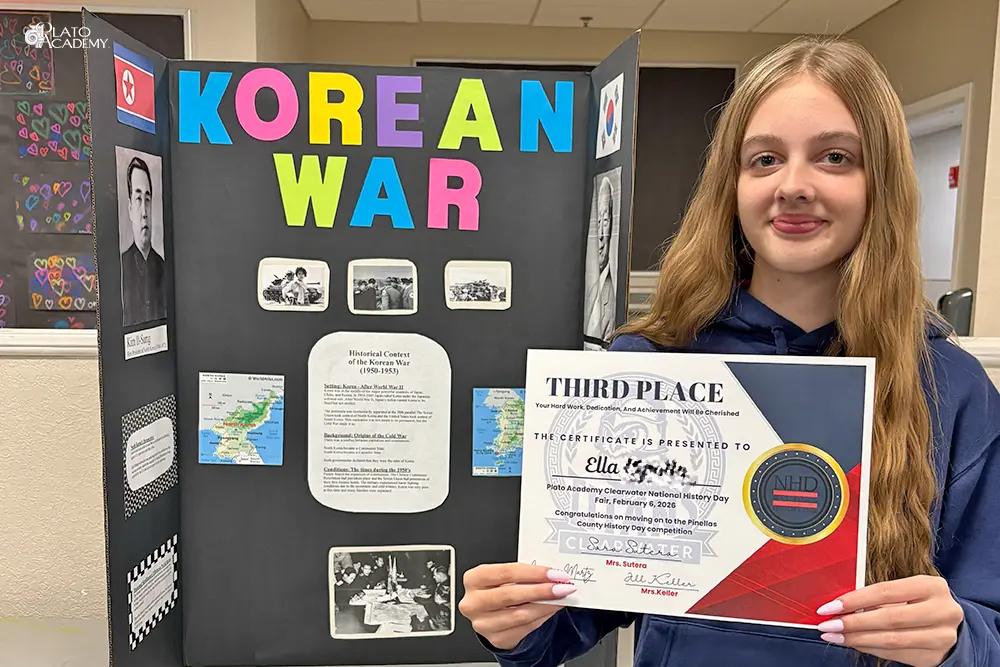
Two teams earned third-place recognition. McKenna G, Alyssa S, and Lexi C presented on the liberation of concentration camps, examining how Allied forces confronted the atrocities of the Holocaust and began the long process of justice and remembrance. Ella C rounded out the top finishers with an exhibit on the Korean War, analyzing the conflict that solidified Cold War divisions and continues to shape geopolitics today.
The three winning teams will advance to represent Plato Academy Clearwater at the Pinellas County National History Day competition on March 7. County winners subsequently progress to state and potentially national competitions.
National History Day, established in 1974, engages more than half a million students annually in conducting original research on historical topics. The program emphasizes critical thinking, research skills, and the ability to construct evidence-based arguments, competencies that extend well beyond the history classroom.
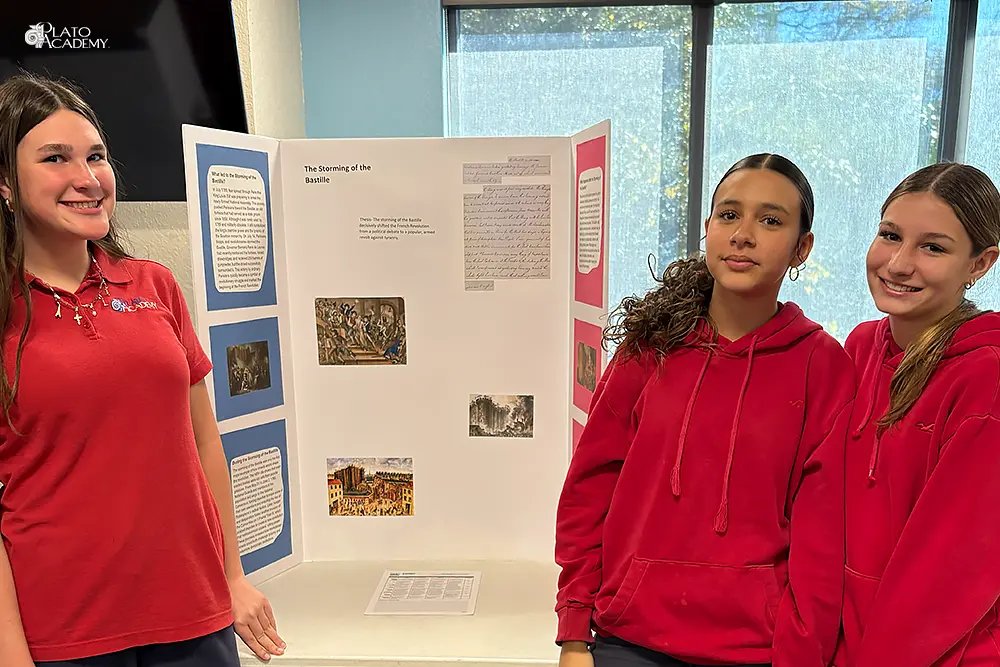
Each exhibit required students to identify primary sources, analyze historical context, and articulate the lasting significance of their chosen topics.
As these young historians prepare for county competition, they carry forward important stories of human courage, tragedy, and transformation.