Plato Academy Schools students in Florida connect with their peers at Arsakeio School in Greece through cross-cultural exchanges.
February 2026, Tampa, Florida
It started with a simple question from Greece: What is your school day like?
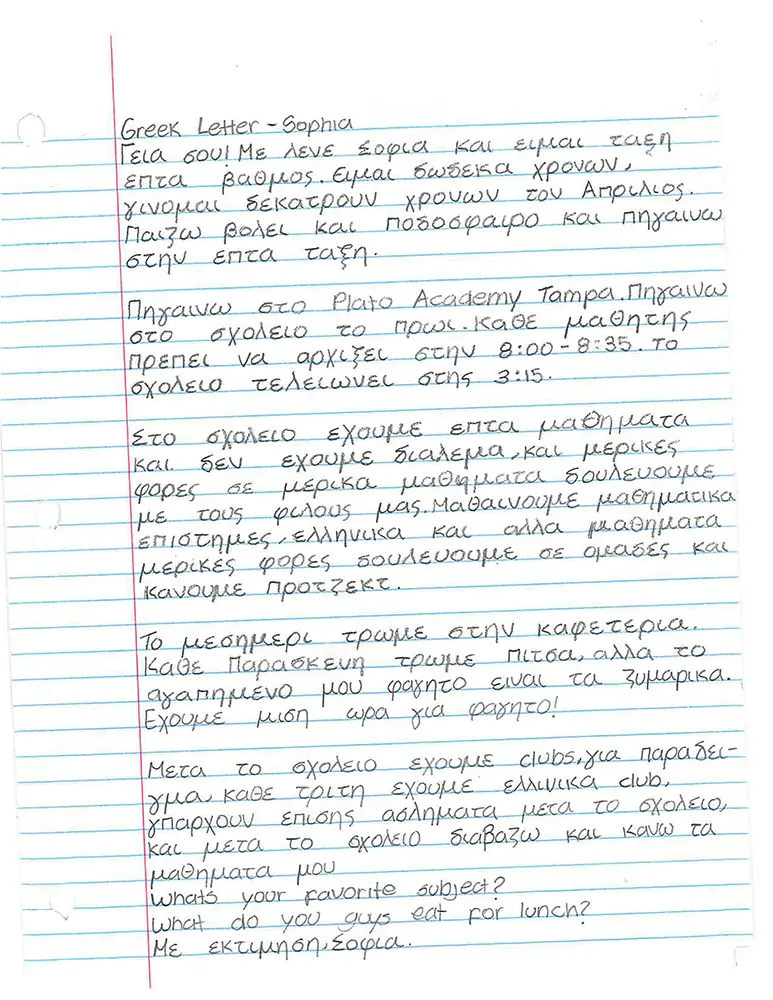
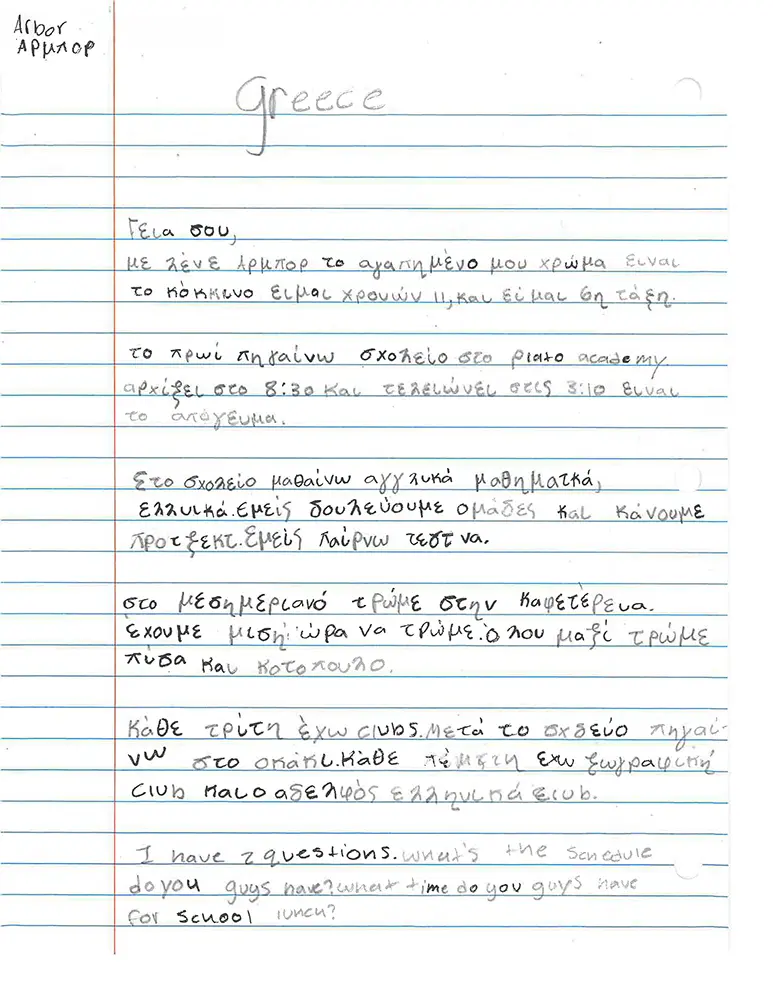
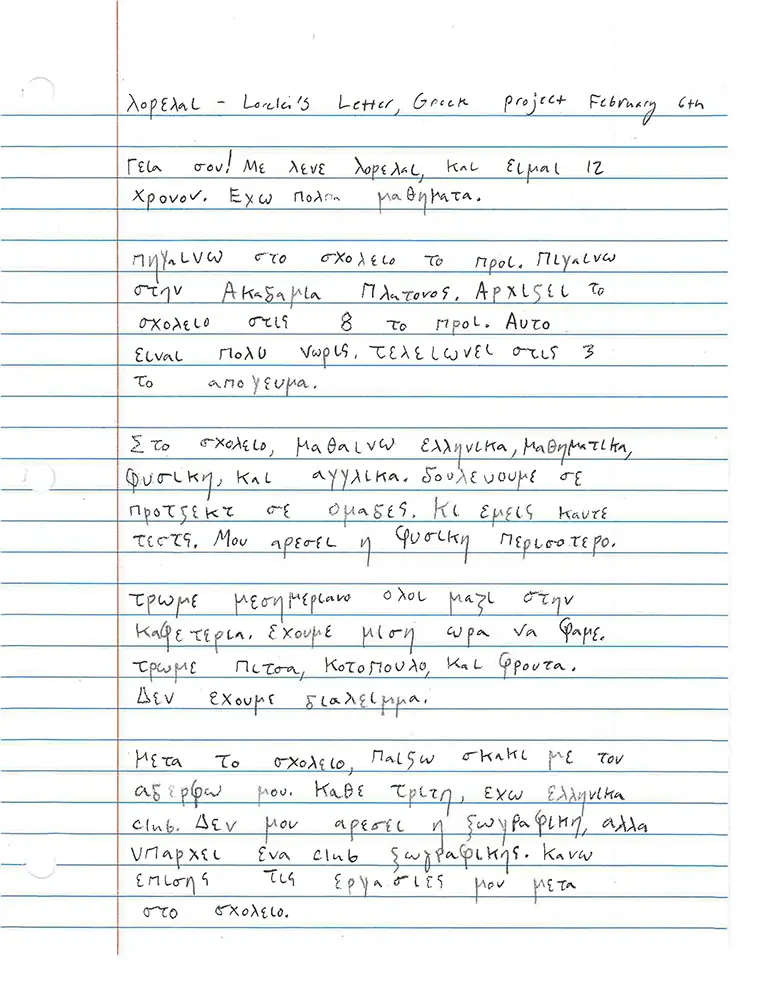
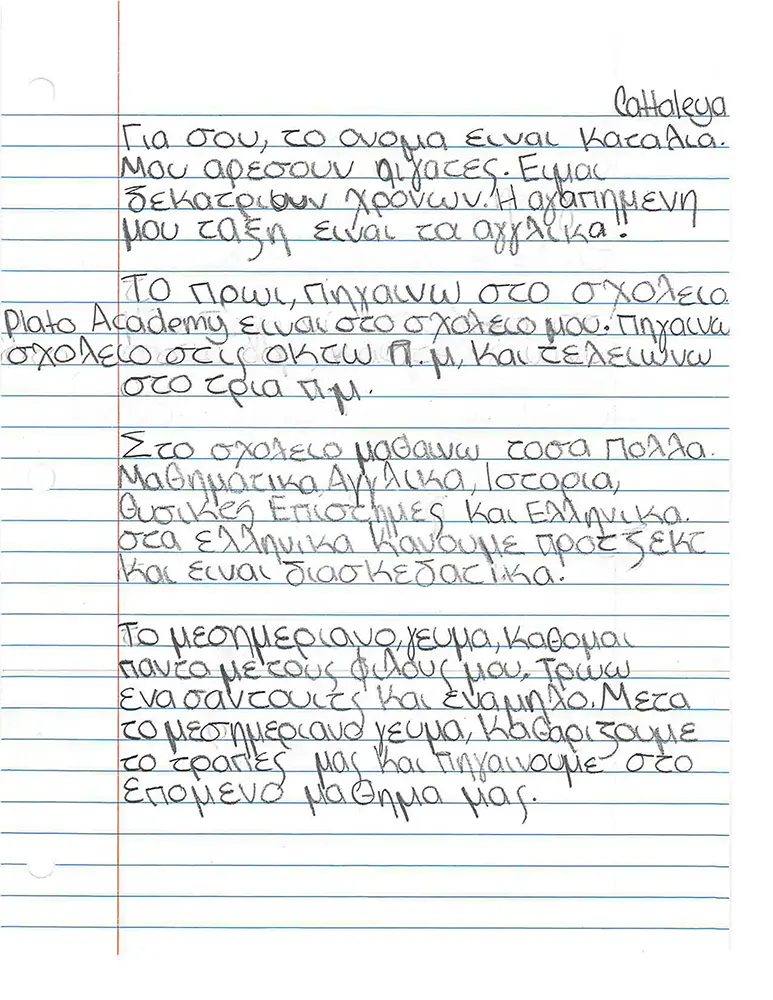
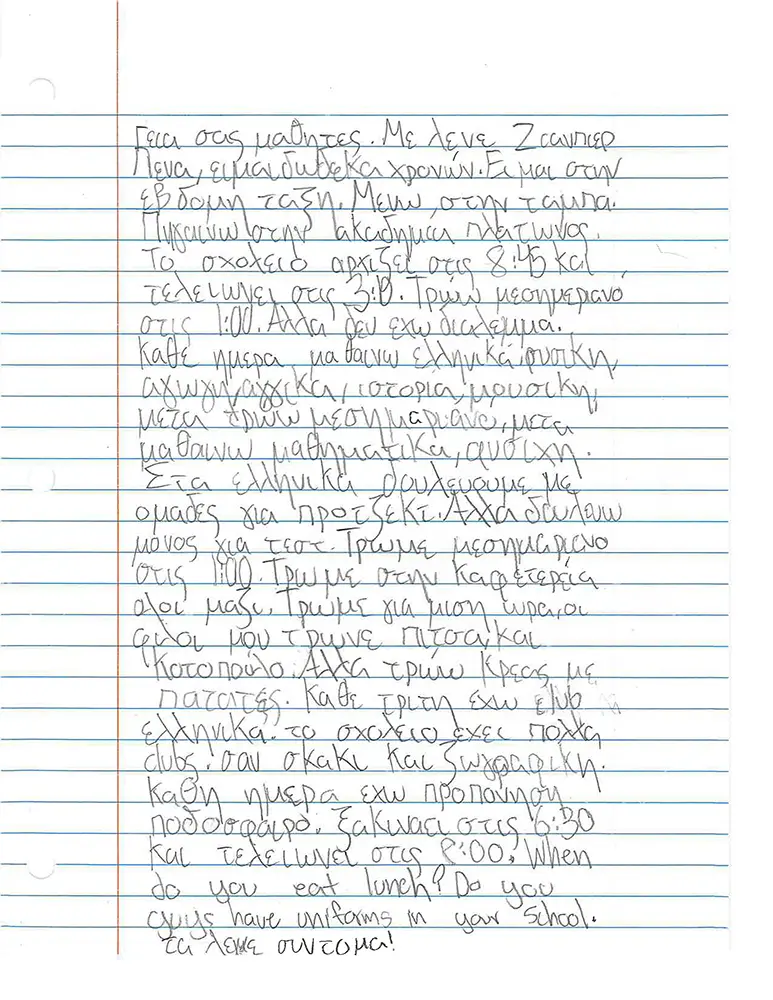
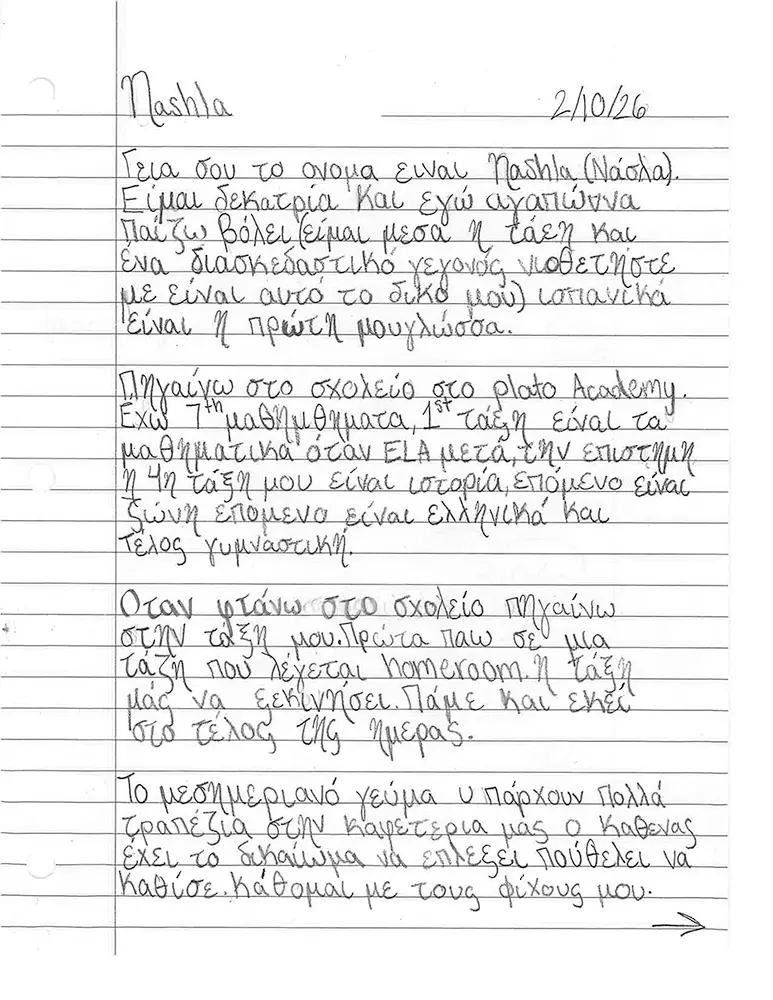
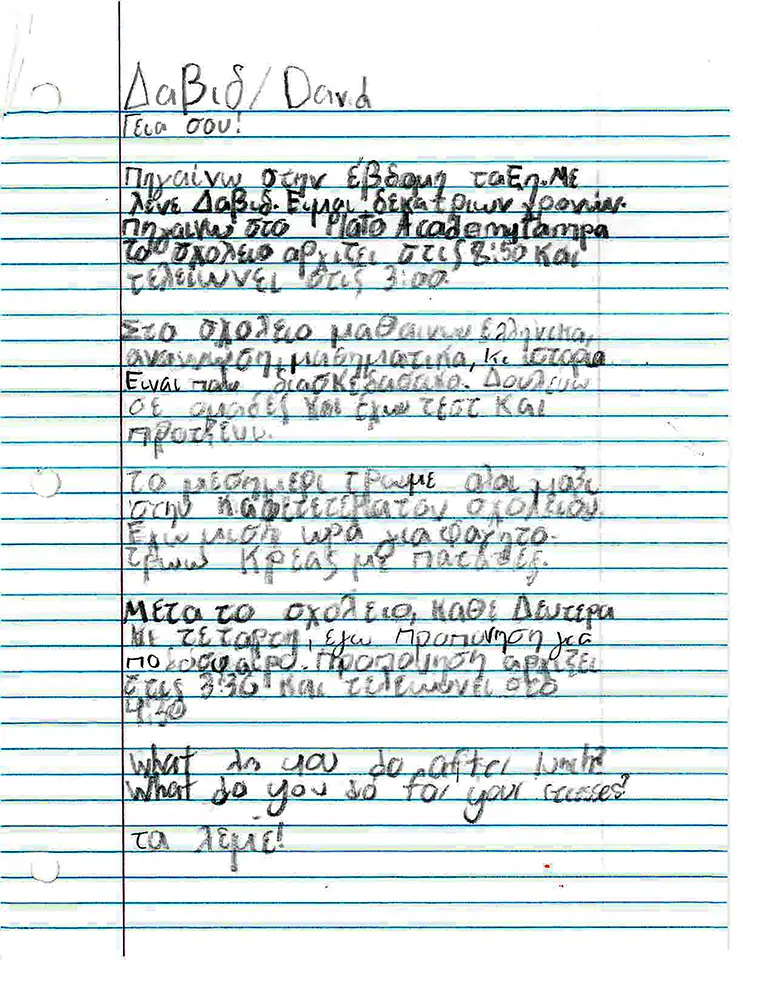
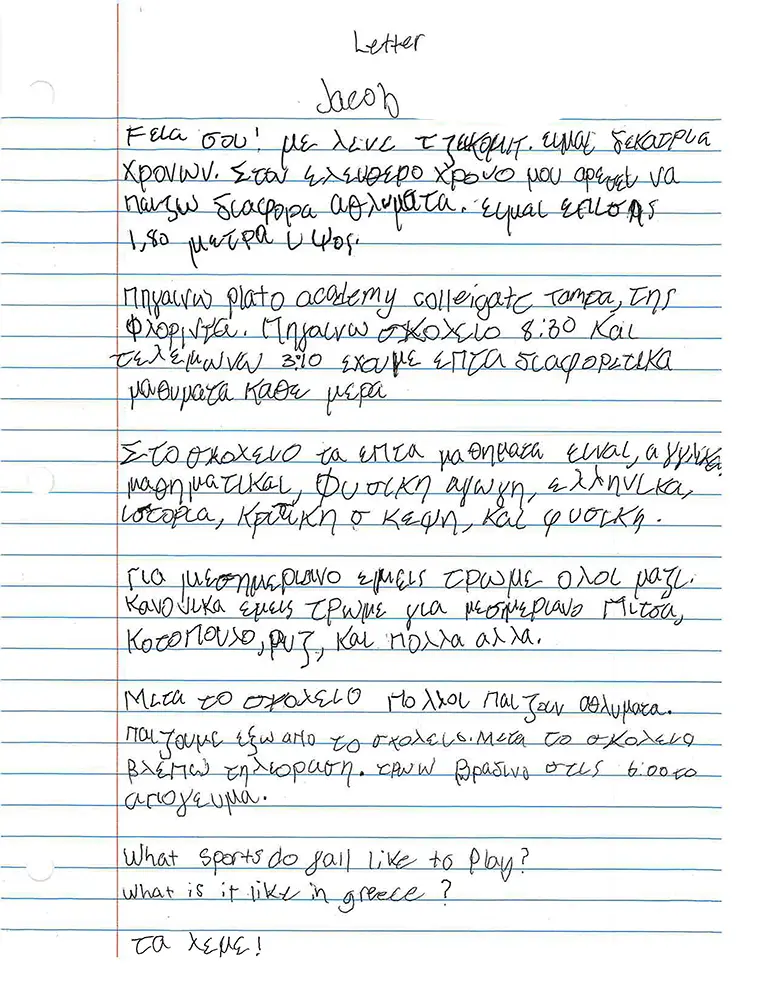
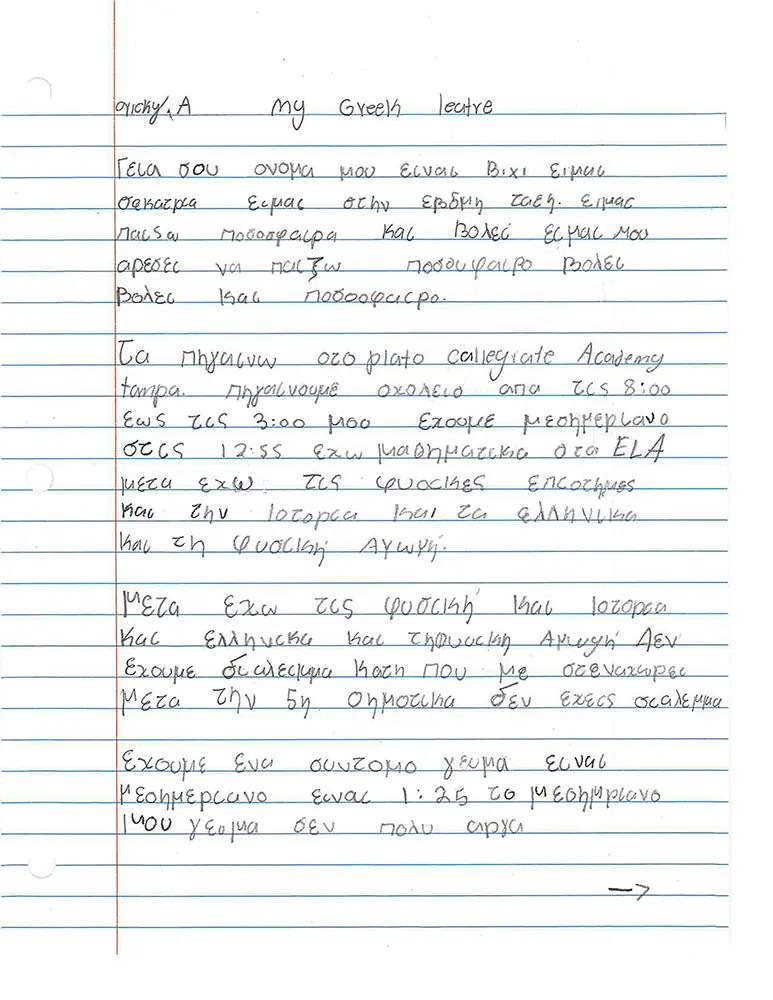
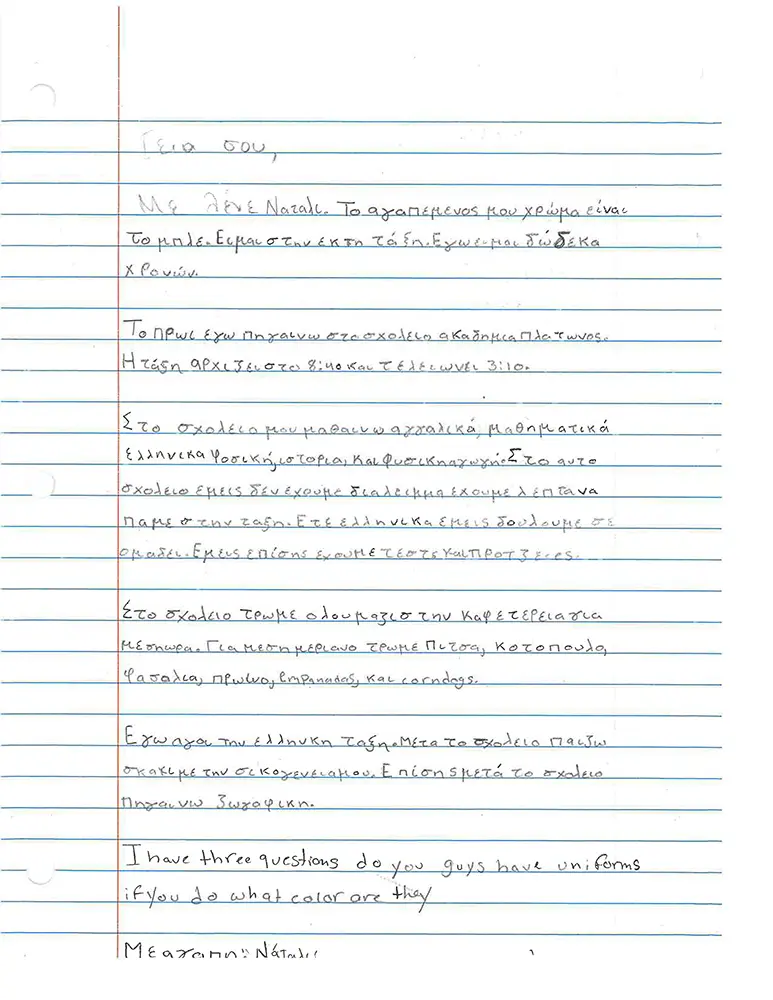
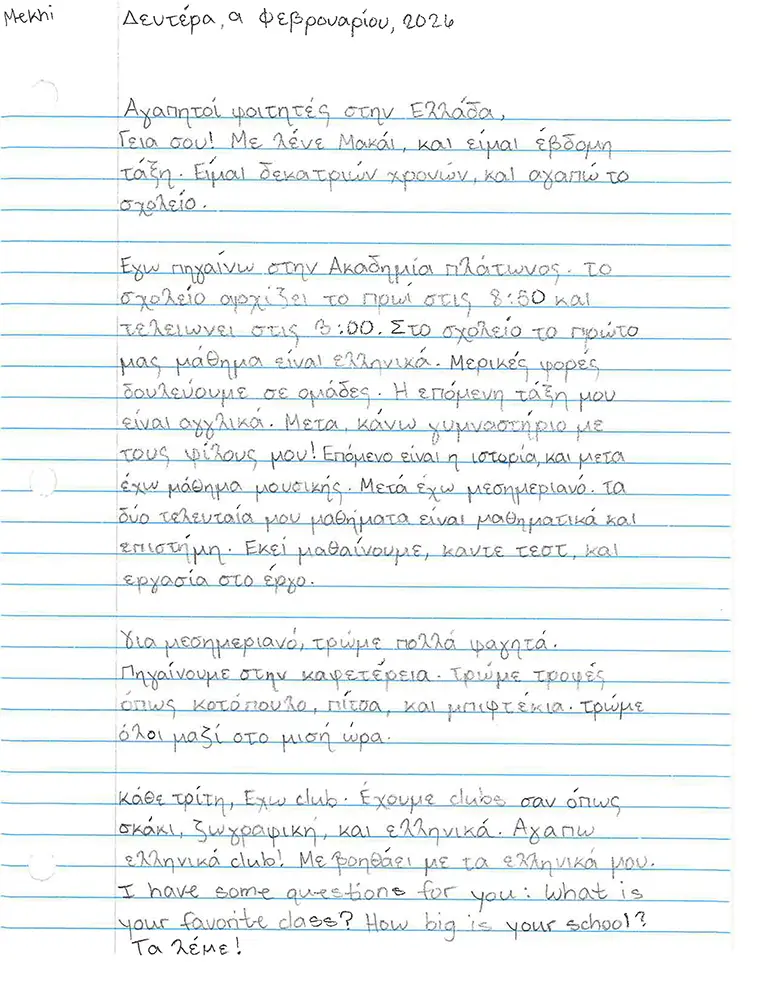
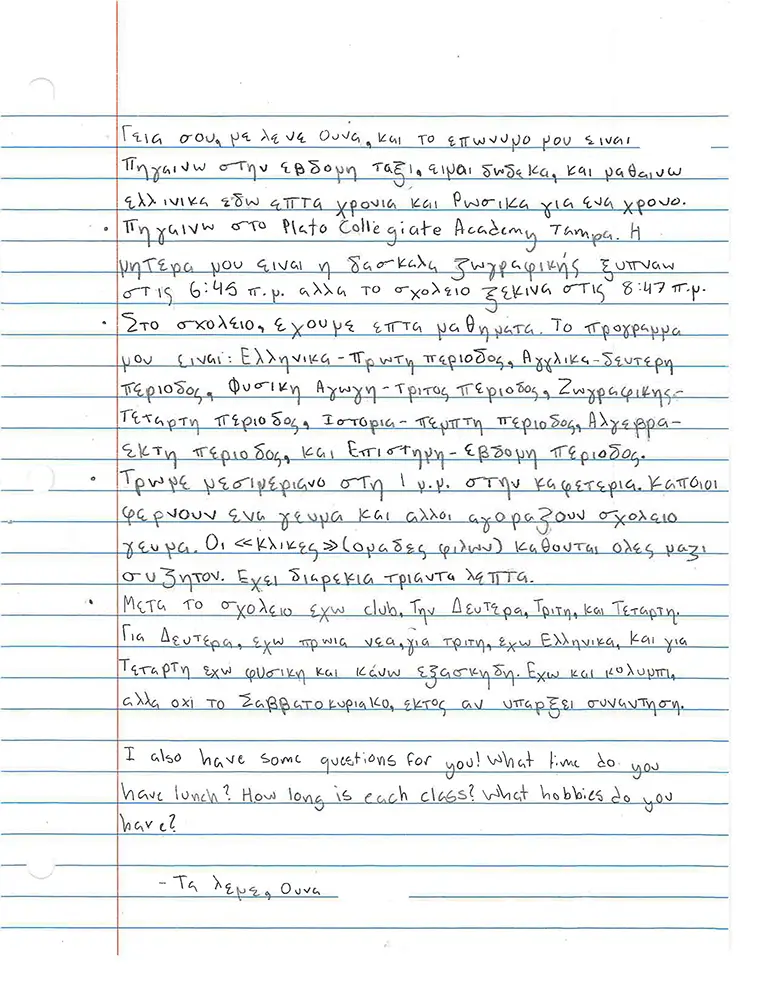
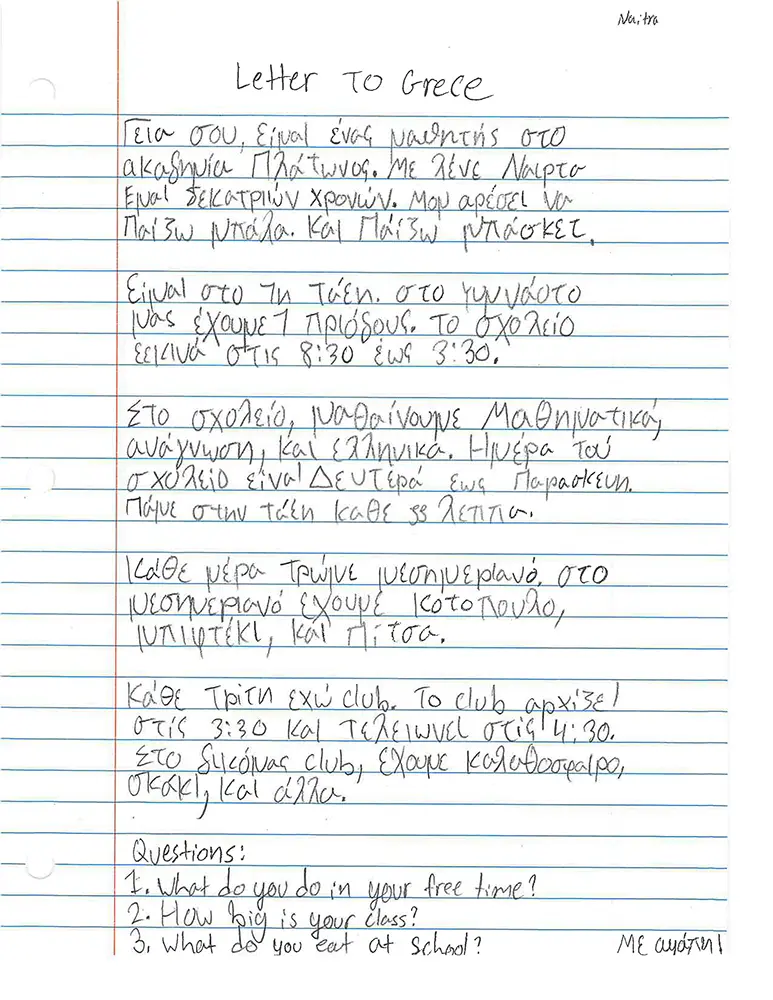
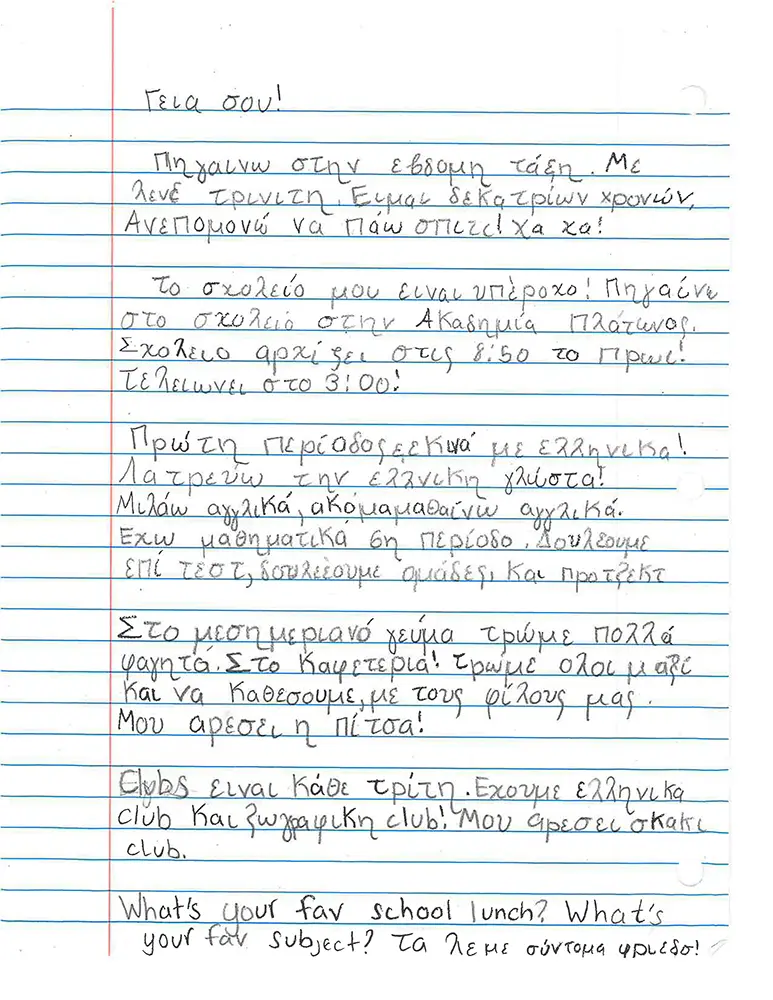
What followed was a meaningful language experience for Plato Academy Tampa students and students of Arsakeio School in Athens, Greece. Seventh and sixth graders sat down with pencils and lined paper and did something remarkable. They wrote back, in Greek, to students thousands of miles away. And they meant every word.
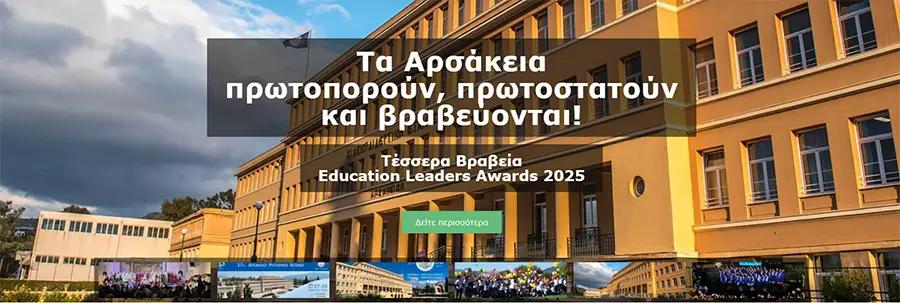
The exchange was straightforward in concept. Students at Arsakeio School in Greece under the guidance of their 6th grade teacher Ms. Bereri, wrote to their counterparts at Plato Academy, describing their school routines, their lunch habits, their classes, and their daily lives. When those letters arrived, Ms. Karagianni’s Plato Collegiate Academy students read them carefully, then composed their own responses, sharing what school looks like on their side of the world.
What came out of those responses is a vivid portrait of student life in Tampa. Across more than a dozen handwritten letters, students described school days that run from roughly 8:30 or 8:50 in the morning until 3:00 or 3:15 in the afternoon, seven periods of classes that include Greek, math, English, science, history, and P.E., and cafeteria lunches of pizza, chicken, sliders, empanadas, corn dogs, and the occasional sandwich and apple. Several students noted that their school has no formal break between classes, a detail more than one of them seemed to want their Greek pen pals to know about.
We are grateful to the “Adopt A Ship” program by Project Connect for doing what a good vessel always does: closing the distance between two distant shores. Because of their work, our students in Tampa and students in Athens are no longer strangers separated by an ocean. They are pen pals, exchanging words and curiosity in the same language. Adopt A Ship built that bridge, and our students walked right across it.
Beyond the logistics, the letters revealed something more personal. Students like Mekhi wrote that they love school. Triniti confessed she couldn’t wait to visit Greece someday. Oona, who has been studying Greek for seven years, described her full weekly schedule with precision and genuine pride. Sophia closed her letter with warm respect. David asked what his pen pal does after lunch. Jacob wanted to know what sports they play in Greece. Nearly every student ended with questions, genuinely curious about the lives of kids their age in another country.
That curiosity is the point. Writing in Greek, organizing their thoughts, and communicating meaningfully to real readers pushed students to use the language in a way that no worksheet can replicate. They had something to say, and someone real of the same age to say it to.
This is what language education looks like when it moves beyond memorization and grammar drills and into actual human connection. Plato Academy has long held that Greek language instruction is about more than academic achievement. It is about identity, culture, and the kind of global awareness that shapes how young people see themselves in relation to the wider world. This project delivers on all three.
For now, students are waiting. Somewhere in Greece, a group of students is reading about Tampa school lunches, chess clubs, soccer practice, and a girl who loves volleyball and speaks Spanish as her first language. And they are probably writing back.