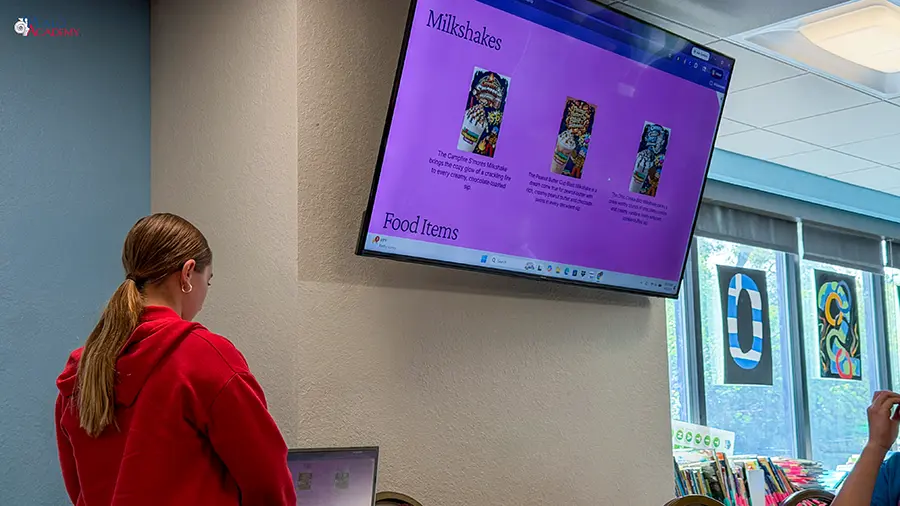
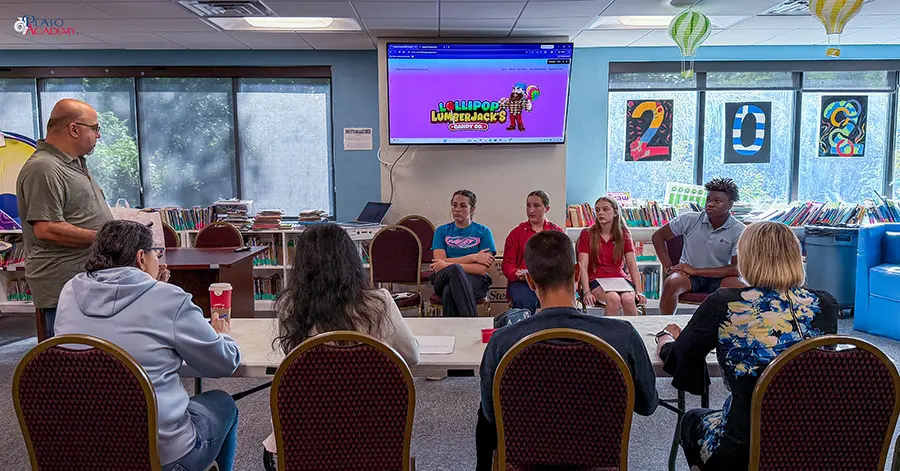
At Plato Academy Clearwater, eighth-grade students took their classroom skills into the real world, pitching fully redesigned websites to a live panel of judges in a capstone event that raised the bar for what student projects can look like.
There were no science fair tri-folds. No poster boards with construction paper borders. When the eighth graders from Plato Academy Clearwater’s Digital Information Technology program stepped up to present their capstone projects last week, they came armed with redesigned, functional websites for real businesses, a rehearsed pitch, and confidence for the quality of their work.
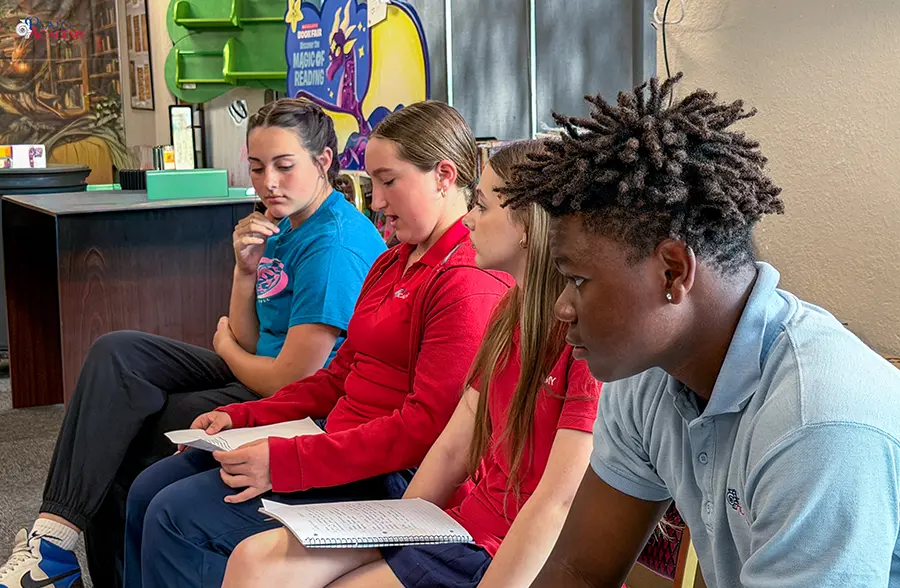
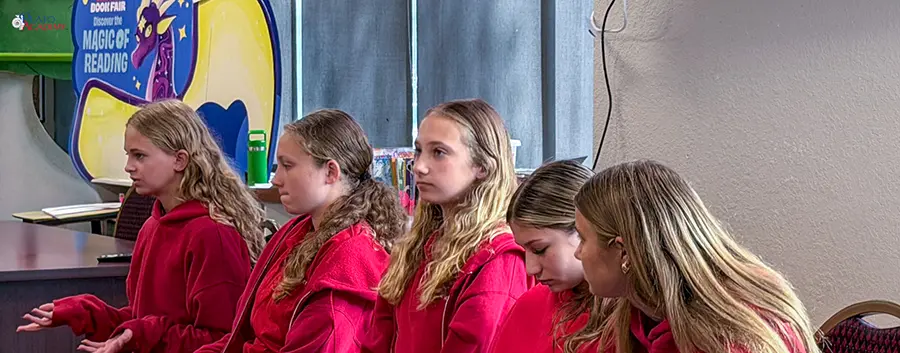
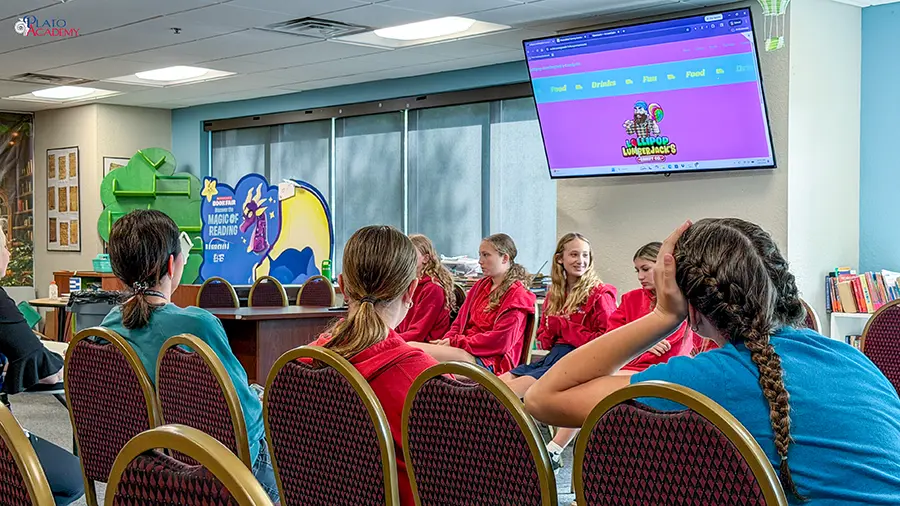
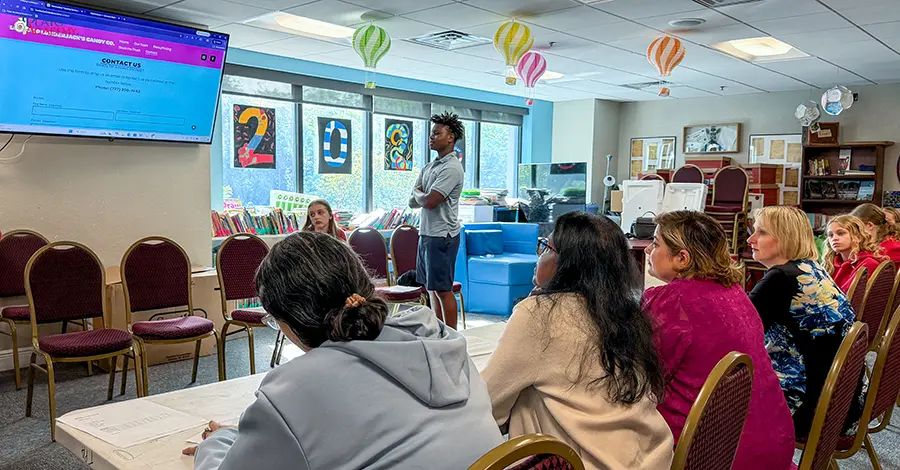
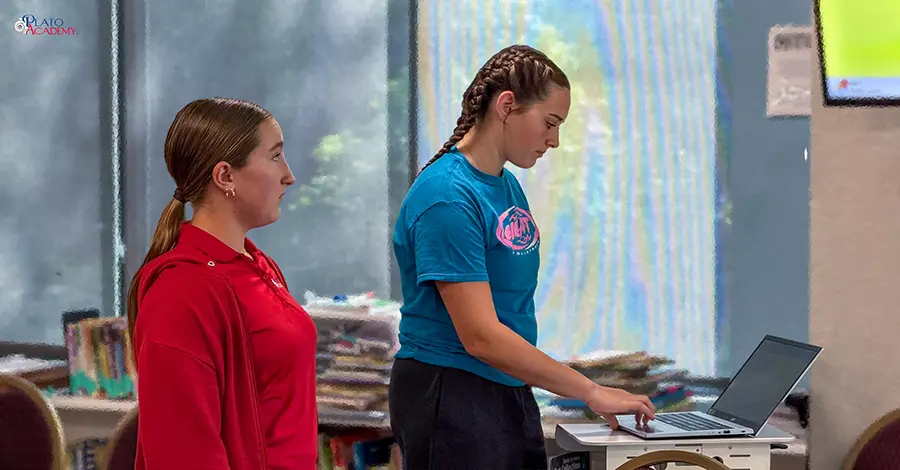
The format was unmistakably Shark Tank. Students faced a panel of judges, fielded questions, and defended their creative and technical decisions in real time. What set this event apart from a typical school presentation, though, was what was actually at stake: the businesses were real, the websites are live, and the work the students produced could genuinely be put to use.
A Project Built Around Real Stakes
The capstone grew out of a year-long DIT curriculum that this year included a significant outside partnership. Chad Hage, a volunteer from Microsoft, worked directly with the eighth-grade students, helping them build skills that go well beyond any single class period. The focus areas were deliberate:
1. teamwork,
2. ethical artificial intelligence strategies, and
3. the ability to communicate ideas clearly and persuasively in front of an audience.
Students were divided into teams and each team aligned with one of two businesses, both connected to members of the Plato Academy community. The first was Lollipop Lumberjack’s Candy Co., a small business with a distinct identity and real brand needs. The second was Legacy Tutoring, an educational services company whose online presence needed a sharper, more purposeful voice.
Each team was asked to study their assigned business, identify what the existing website was doing well and where it was falling short, then redesign and refine it according to what the business actually needed. The final deliverable was not a mock-up or a concept sketch. It was a finished product, presented live, defended in front of a room full of adults, and judged accordingly.
The Panel
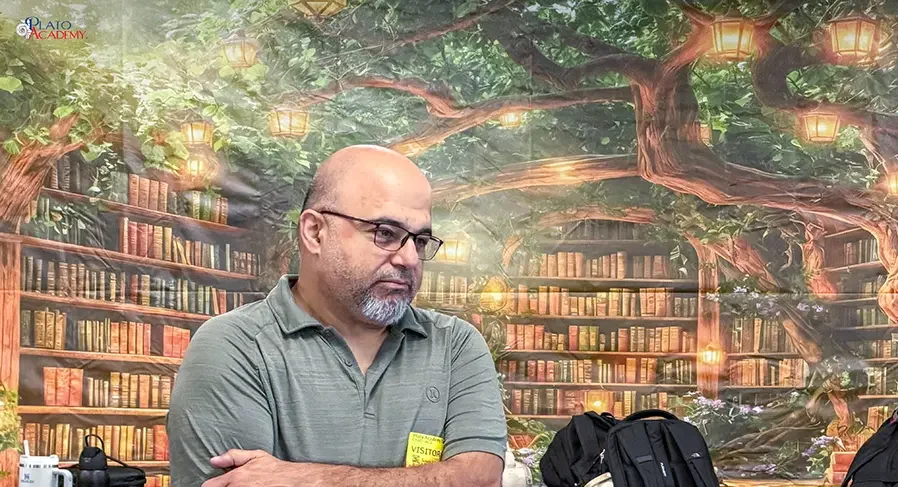
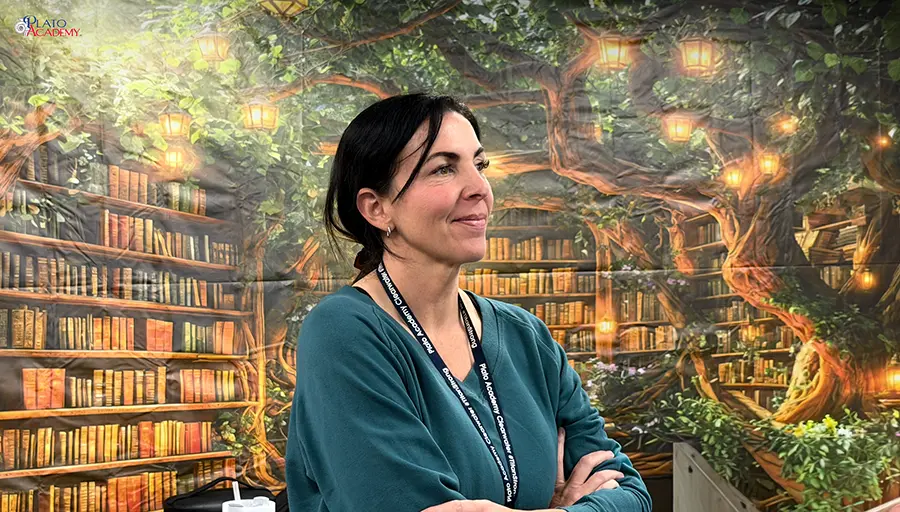
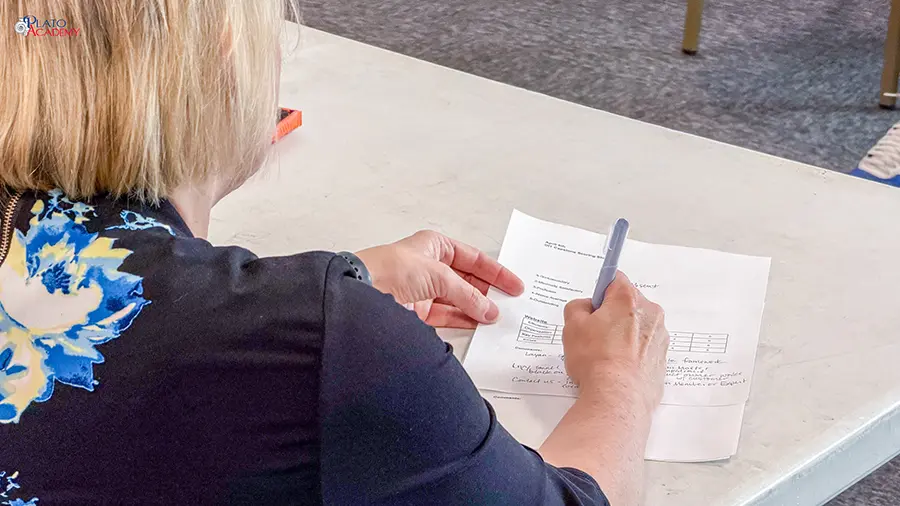
The judges brought genuine professional weight to the room. Dora Komninos, Deepa Rice, Rajni Sachan, Dimitrios Psoras, and Jill Keller each evaluated the student presentations, asking follow-up questions and assessing not only the quality of the websites but the clarity and confidence with which teams explained their choices.
For most students, this was their first experience being questioned by a panel of professionals about work they had personally created. The dynamic is fundamentally different from a classroom presentation to a teacher who already knows the subject. A panel of judges does not owe you a good grade for effort. That pressure, when handled well, produces something real.
Why This Model Matters
Schools across the country are looking for ways to make learning feel relevant. The challenge is that relevance is hard to manufacture. Students can tell the difference between a project that simulates the real world and one that is actually part of it.
What Plato Academy Clearwater built here bridges that gap. The students were not pretending to be designers or strategists. They were doing the work. The businesses they partnered with had actual websites that needed attention, and the student teams were responsible for delivering something those business owners could use. That is a fundamentally different experience than completing an assignment for a grade.
The inclusion of ethical AI strategies as a core component of the curriculum is also worth noting. As AI tools become standard in virtually every professional field, teaching students how to use them responsibly and critically is no longer optional. Working alongside a Microsoft volunteer gave students direct exposure to how those conversations happen at a professional level, well before they enter the workforce.
The Outcome
By the time students reached their presentation day, they had gone through the full arc of a professional project: research, collaboration, revision, design decisions, stakeholder considerations, and finally, public accountability. The Shark Tank format made the stakes feel real because, in a meaningful sense, they were.
Lollipop Lumberjack’s Candy Co. and Legacy Tutoring now have student-produced website redesigns that reflect genuine thought and effort. The students who built them walked away with something that no textbook chapter can replicate: the experience of doing professional-quality work and being able to say it held up under scrutiny.
Plato Academy has always grounded its educational philosophy in the classical tradition, the belief that a well-rounded mind, trained to think critically, reason carefully, and communicate persuasively, is the most durable preparation for any path in life. Those values did not take a back seat during this project. They were, in fact, the engine behind it. The purpose is that the same student who can analyze an argument in a Socratic discussion can walk into a room of professionals and defend a design decision with clarity and confidence. The same discipline that builds strong readers and careful writers builds strong collaborators and strategic thinkers. What this capstone project demonstrated is that classical education and real-world business training are not competing priorities.
At Plato Academy, they reinforce each other.
Plato Academy Clearwater is a K-8 public charter school serving families in pinellas county. For more information about the school’s programs, visit the school’s page.