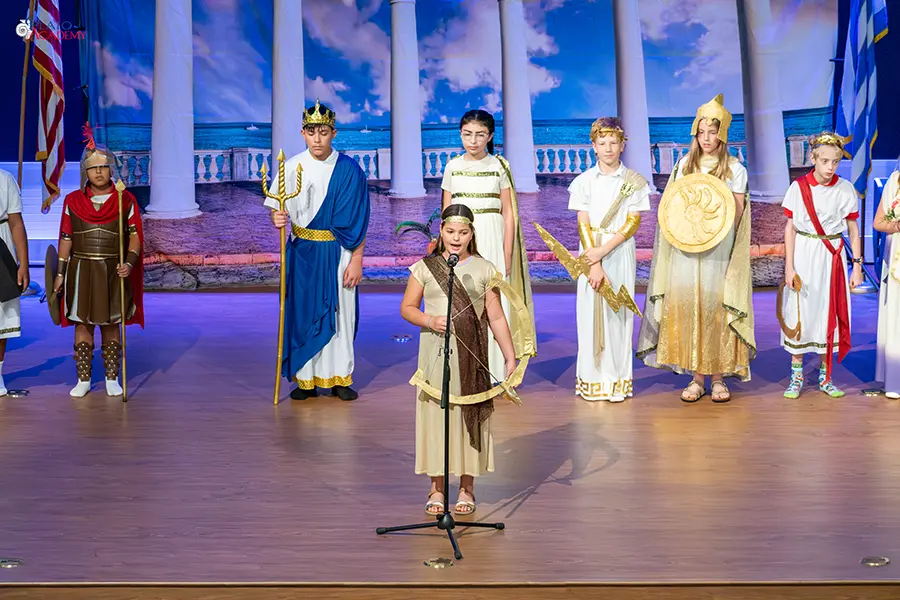
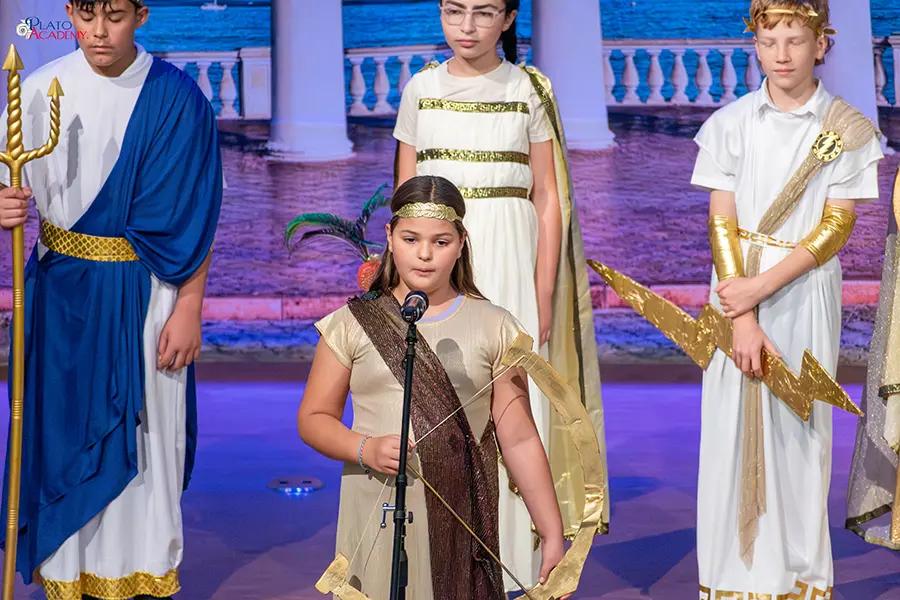
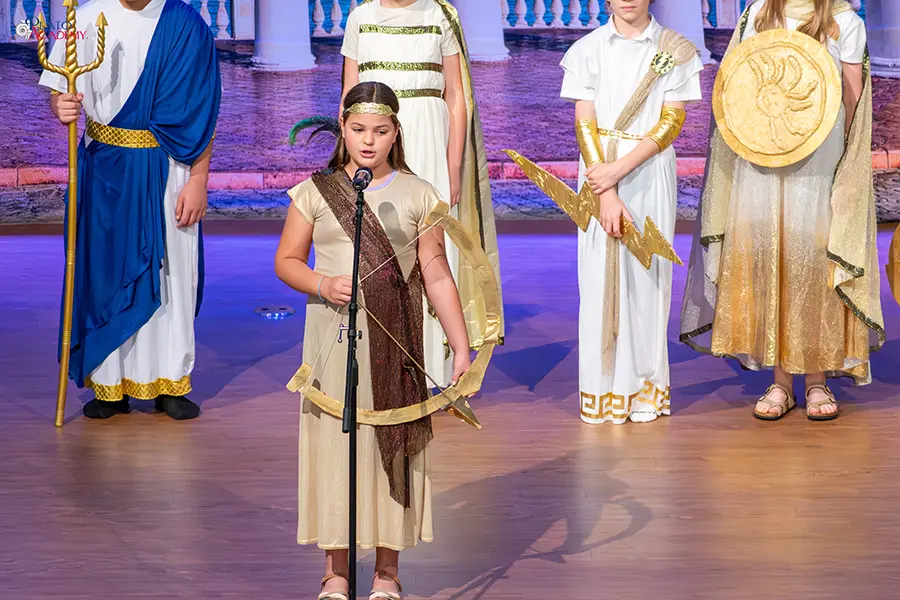
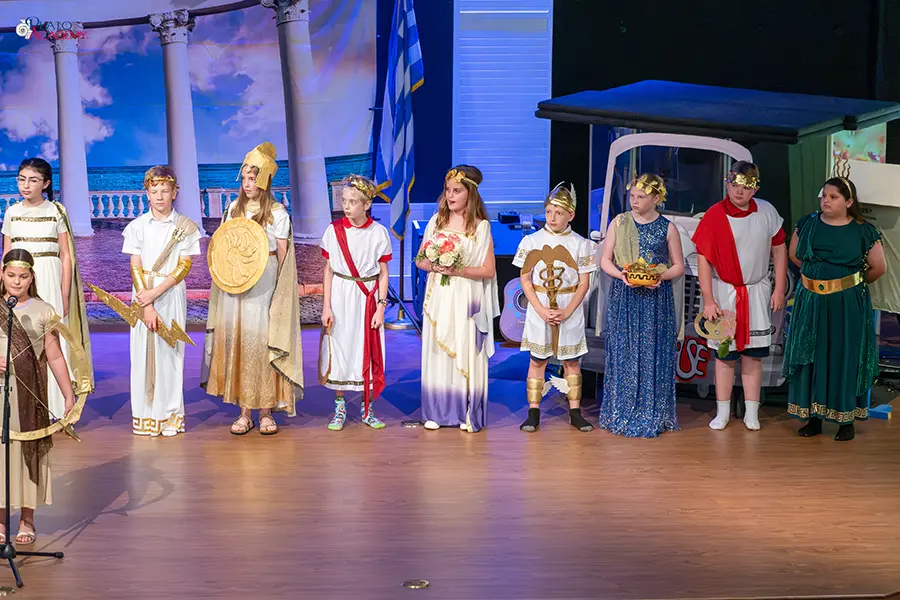
On the morning of March 13, 2026, something larger than a school assembly took shape at Plato Academy Tarpon Springs. What unfolded across the auditorium, the school yard, and the cafeteria was a full cultural reckoning with Greek heritage, built from the ground up by students, teachers, and a community that clearly takes its identity seriously.
The annual Greek Independence Day celebration, one of the school’s most anticipated events of the year, carried particular weight this time. Before the first song was sung or the first dancer took the floor, Principal Emily Heilman and the school community paused to honor the man whose absence was felt.
The Performance Begins With a Tribute
Mr. Fotios Kokalidis joined Plato Academy in 2009. For more than two decades, he was one of the most beloved teachers and as for Plato Academy Tarpon Springs, a supporter of this annual celebration, a teacher who believed deeply that Greek culture deserved a proper stage, not a corner of a morning assembly, but a real event, with dancing, rehearsals, music, and meaning. Fotios passed away last year after a battle with cancer.
Before the performances began, a video tribute to Mr. Kokalidis played in the auditorium, drawing together memories from years of festivals he had championed. The dedication was quiet and sincere.
The rest of the show carried that weight forward, not as a somber tribute, but as the kind of celebration he would have wanted.
Songs, Dances, and a Surprising “Mama Mia”
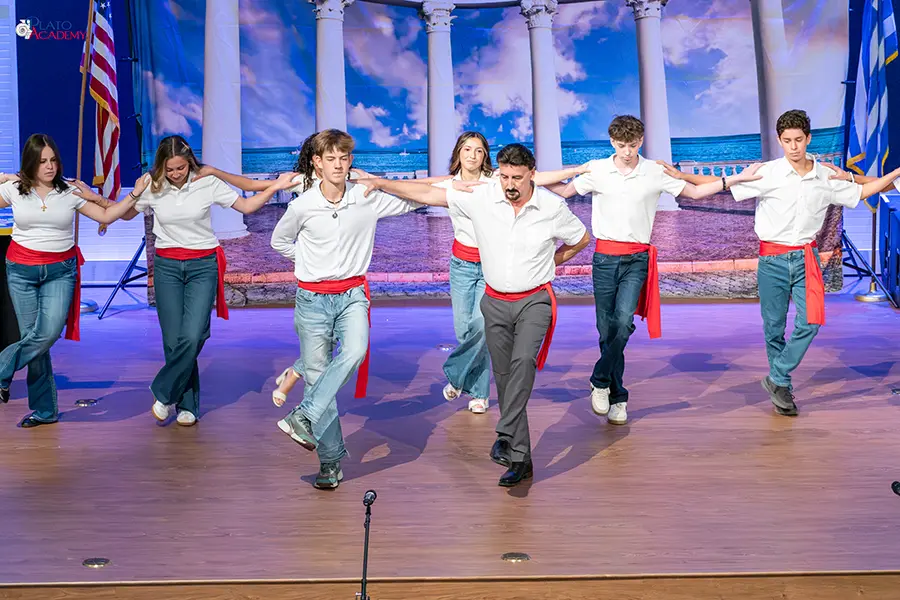
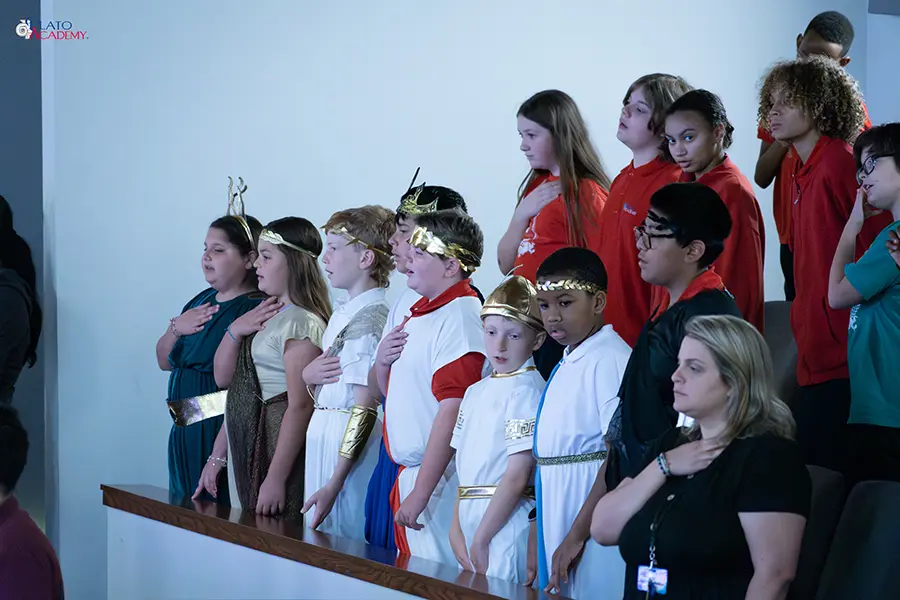
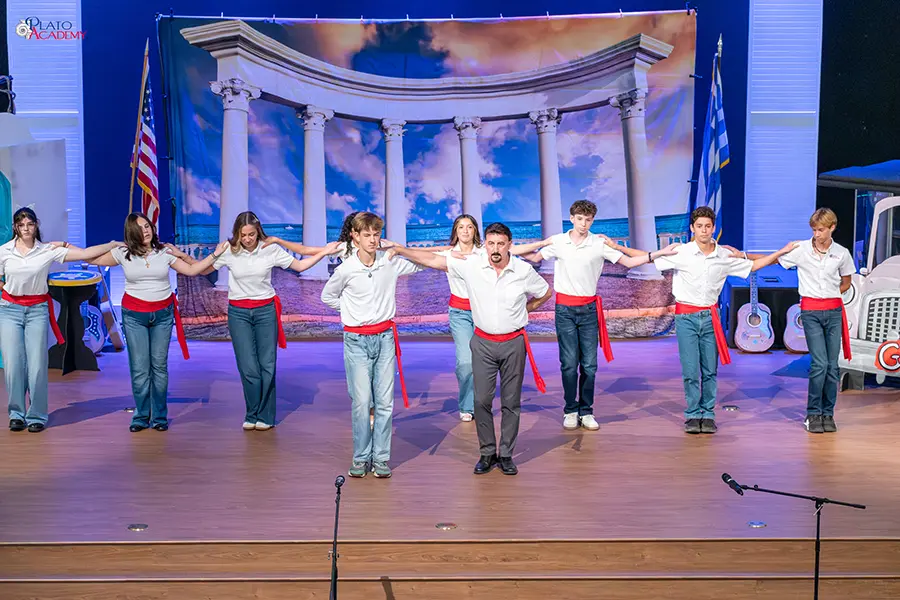
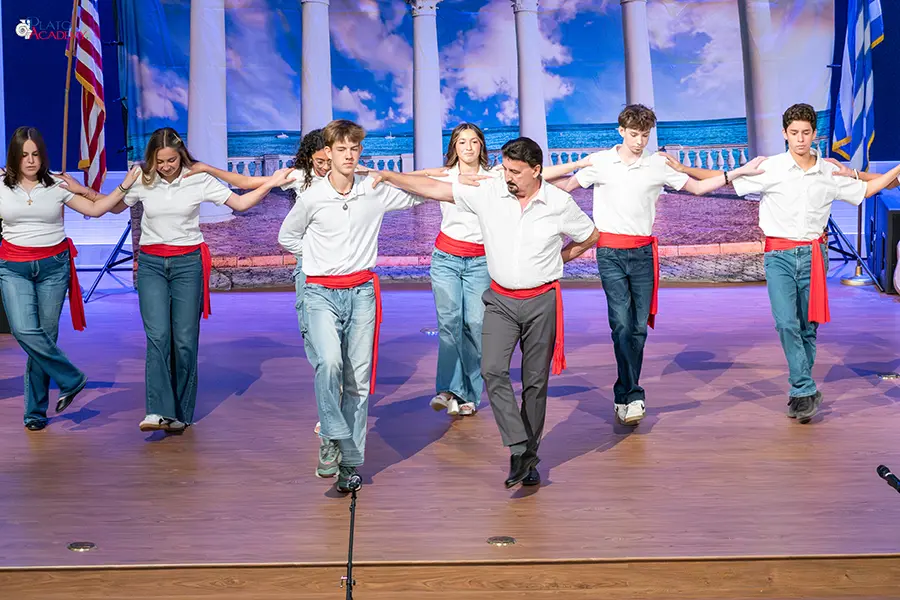
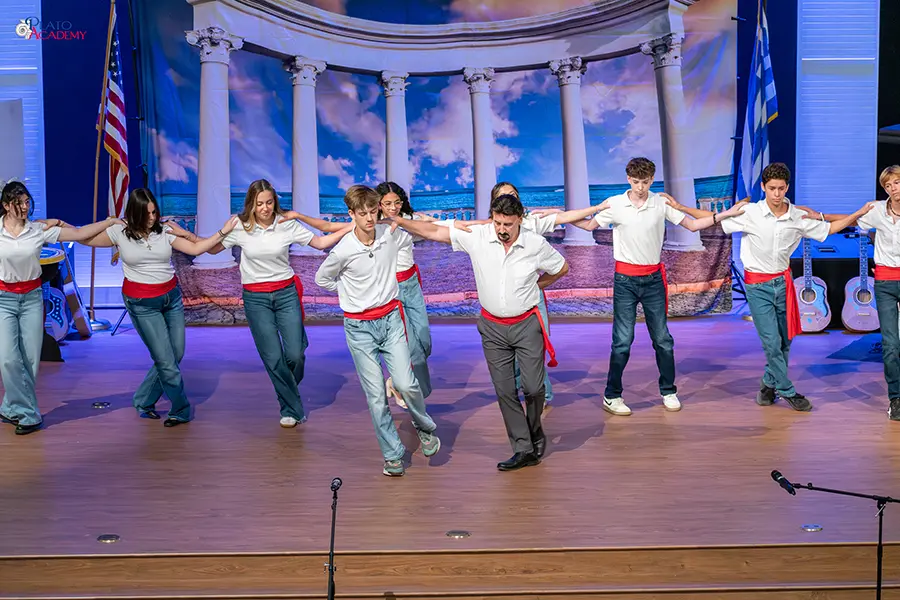
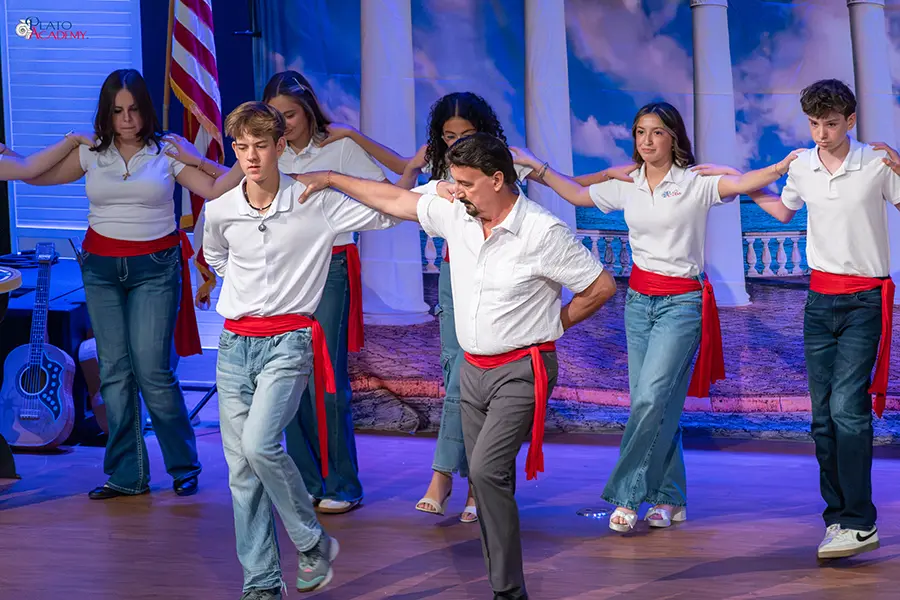
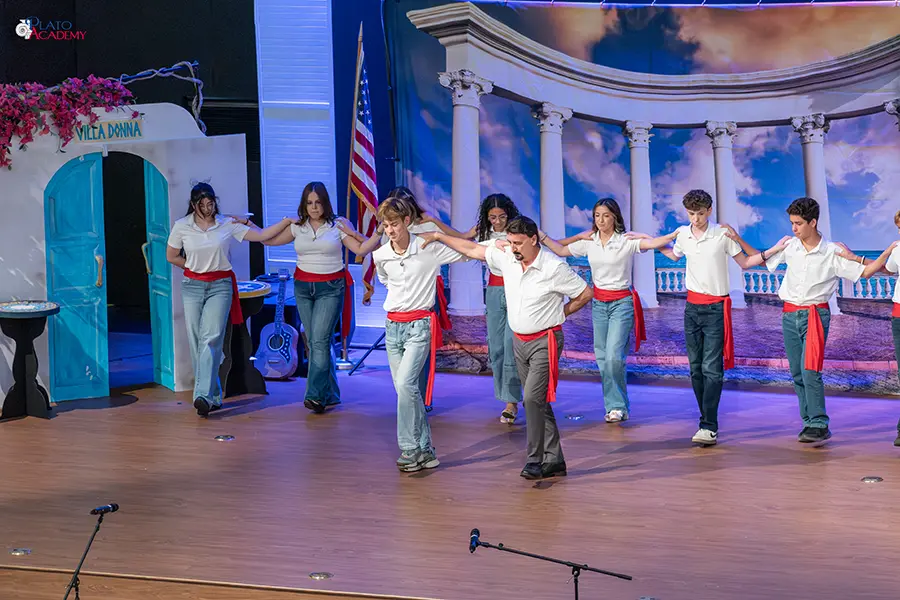
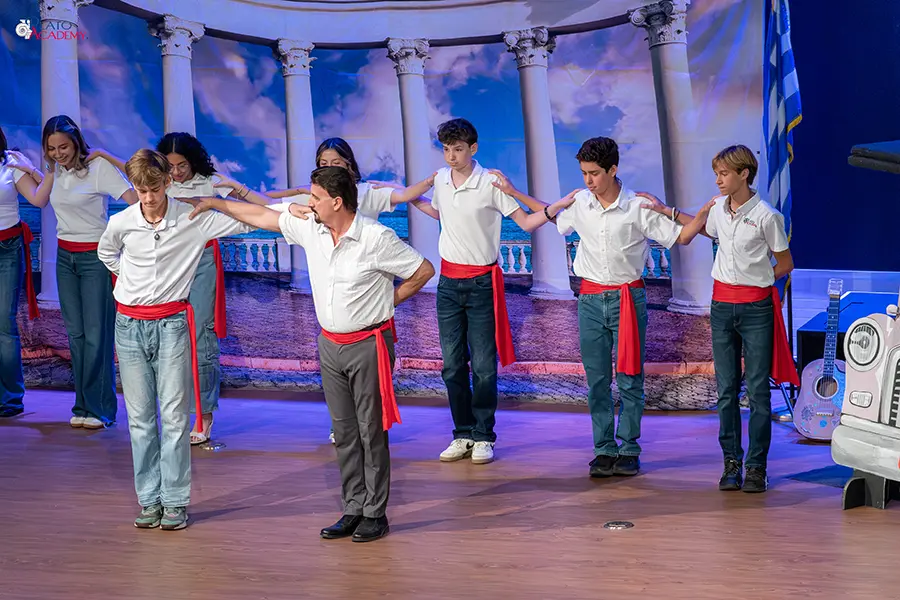
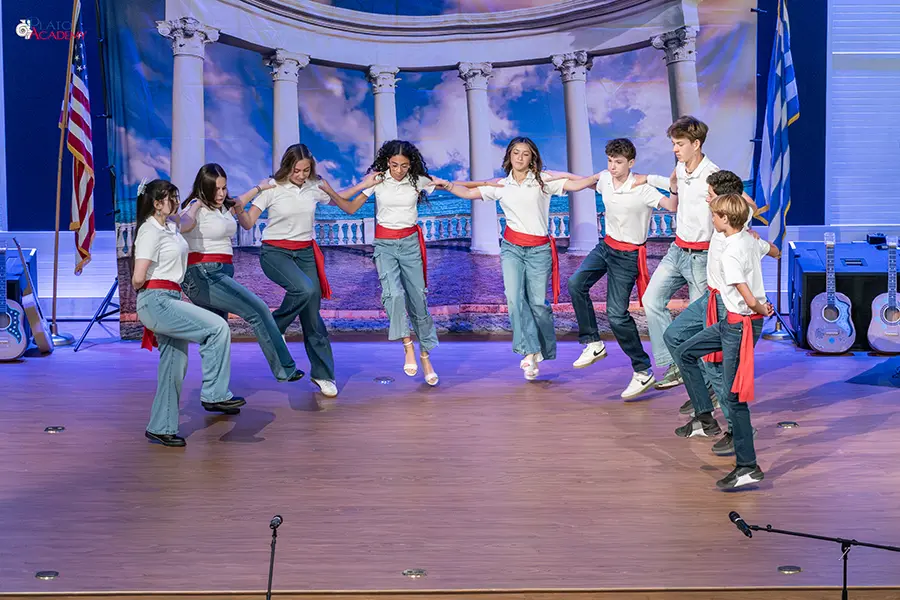
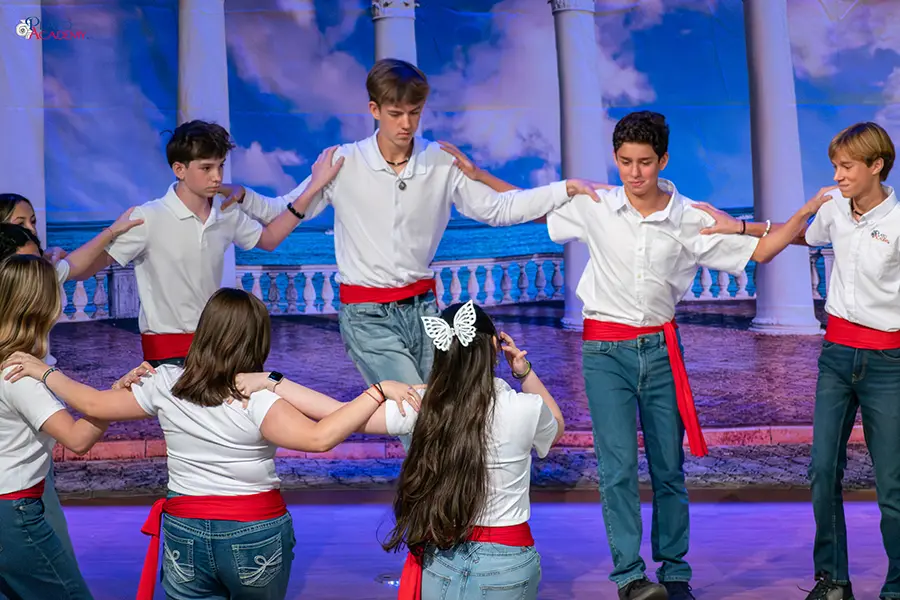
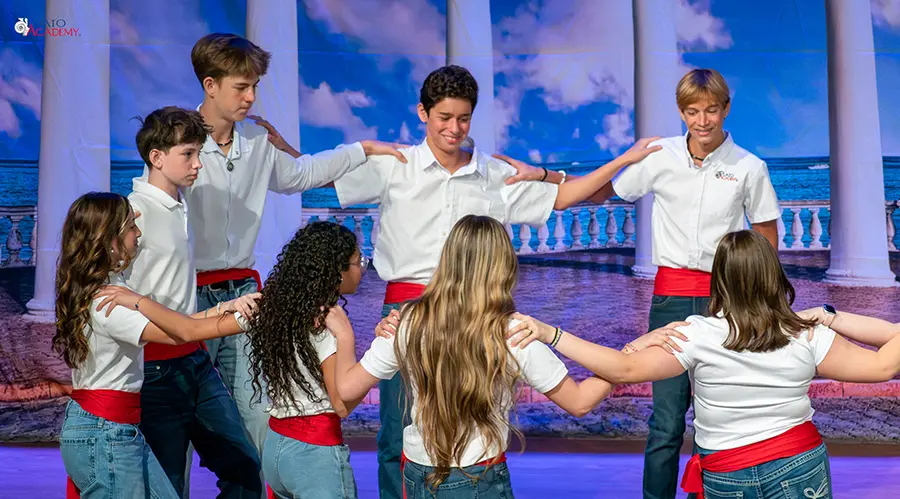
The younger students opened with Greek songs performed in the auditorium, filling the space with the kind of cheerful, slightly nervous energy that only elementary-age performers can deliver. The older students followed with traditional Greek dances, joined on the floor by their Greek language teacher, Mr. Ioannis Giavaras.
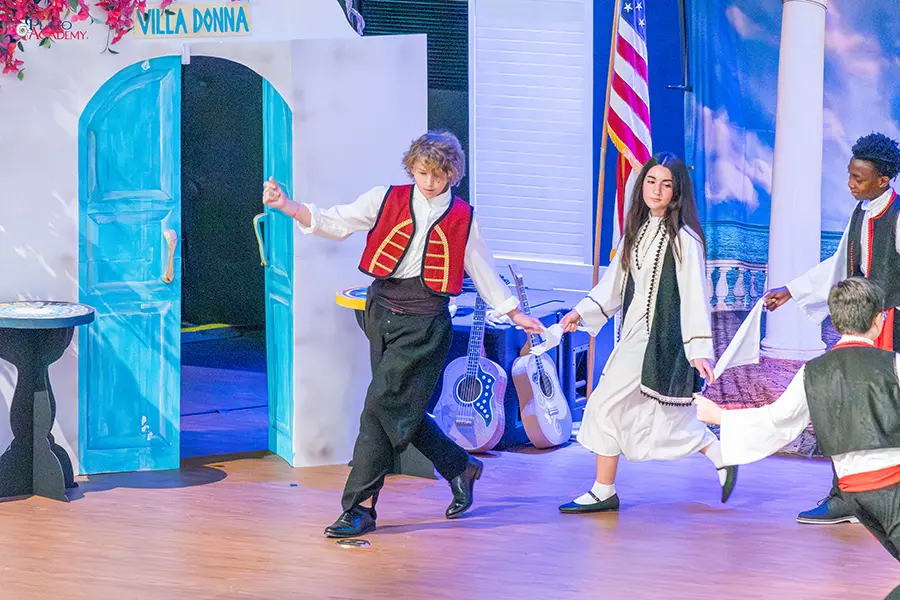
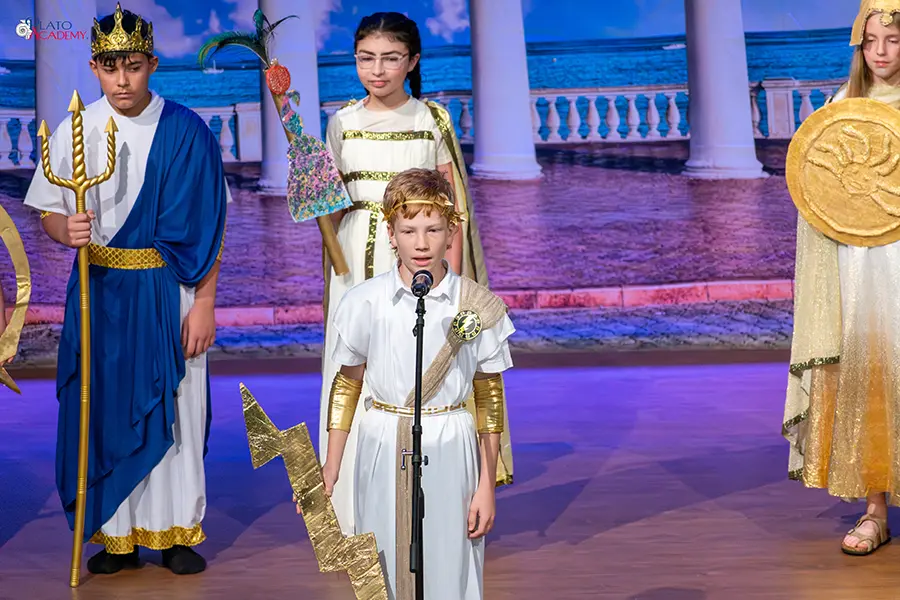
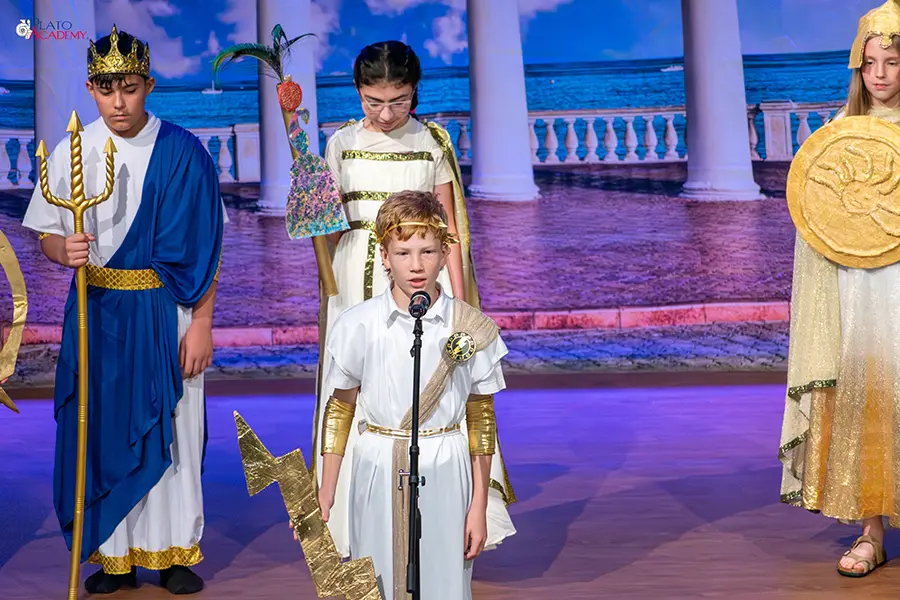
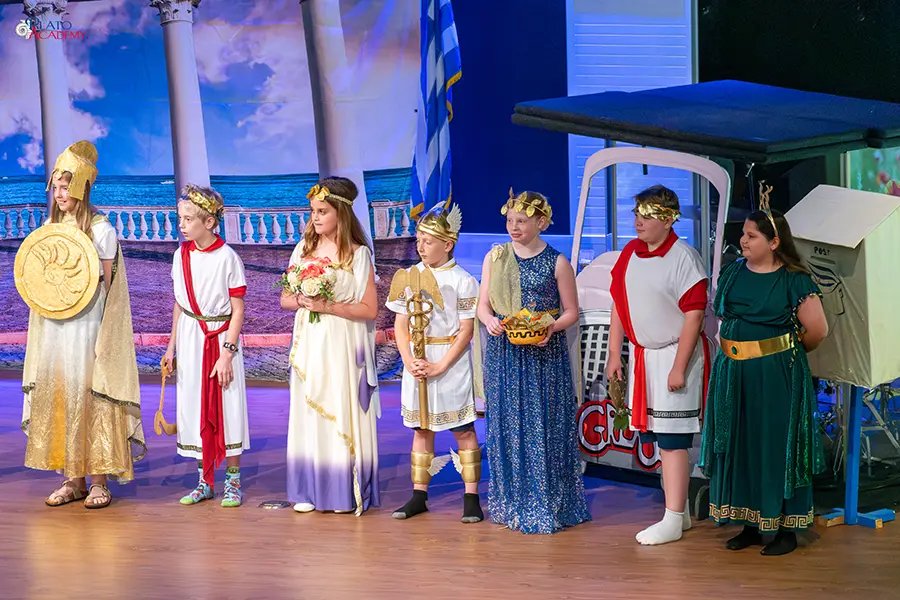
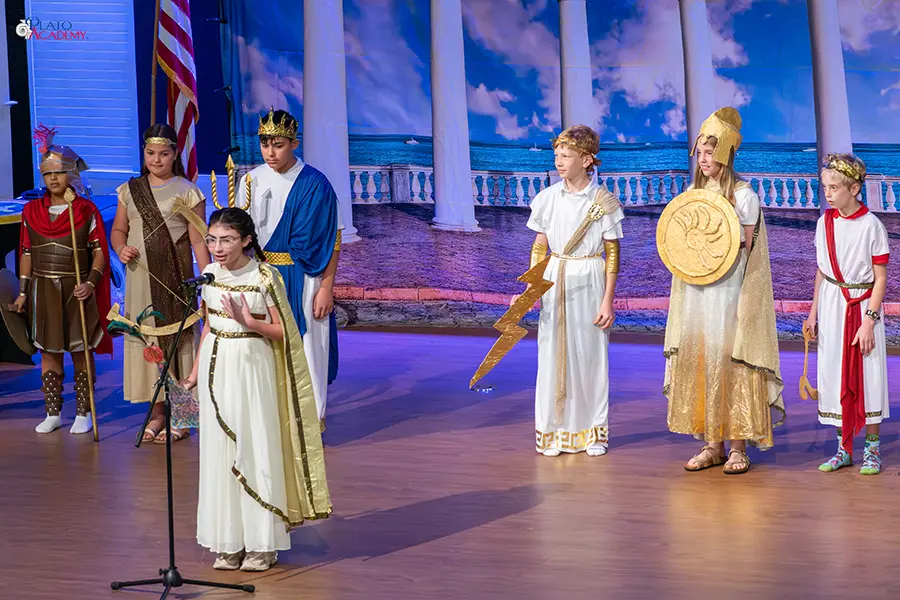
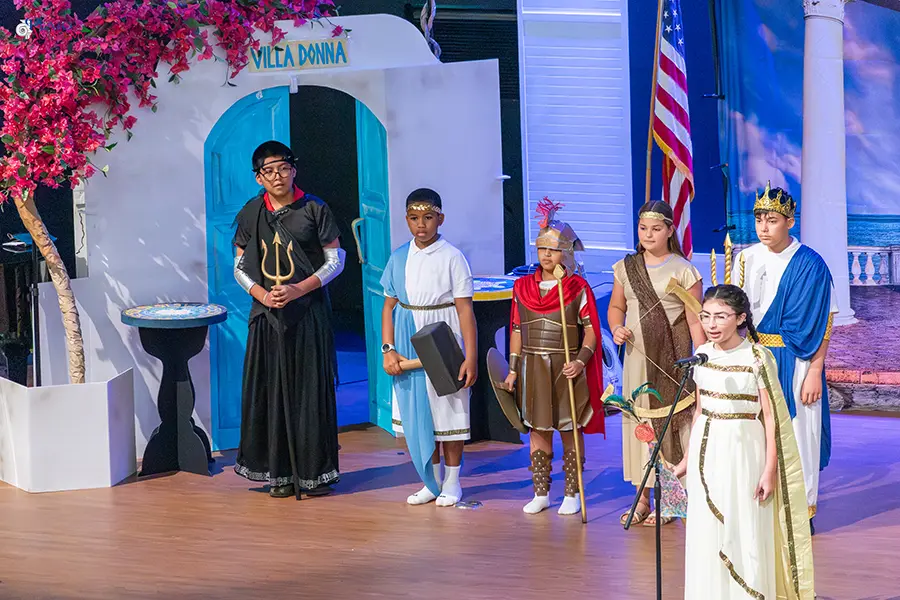
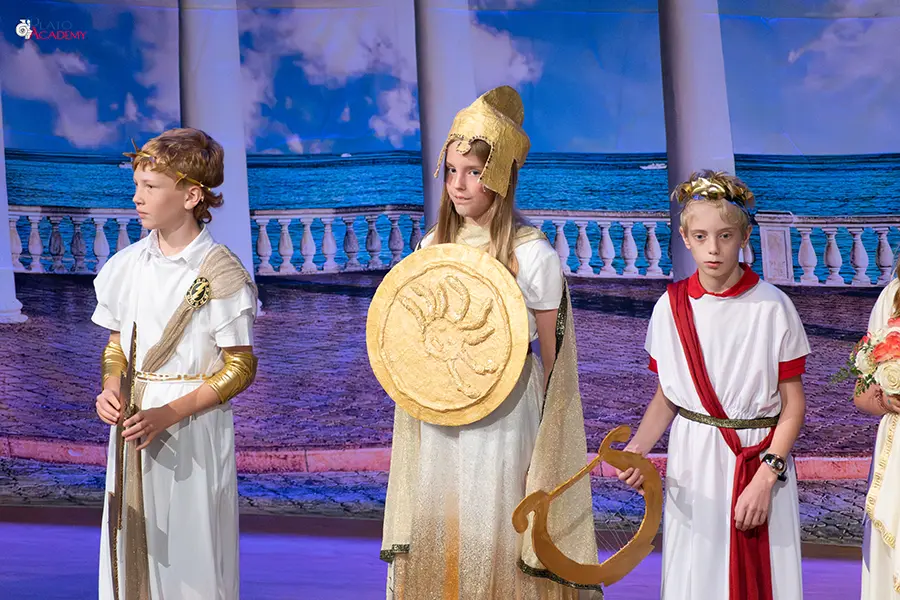
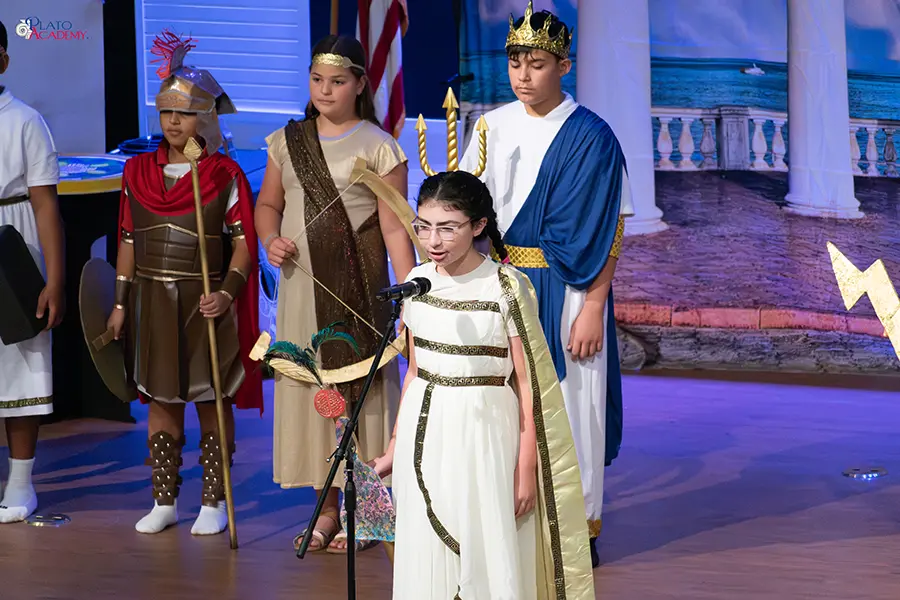
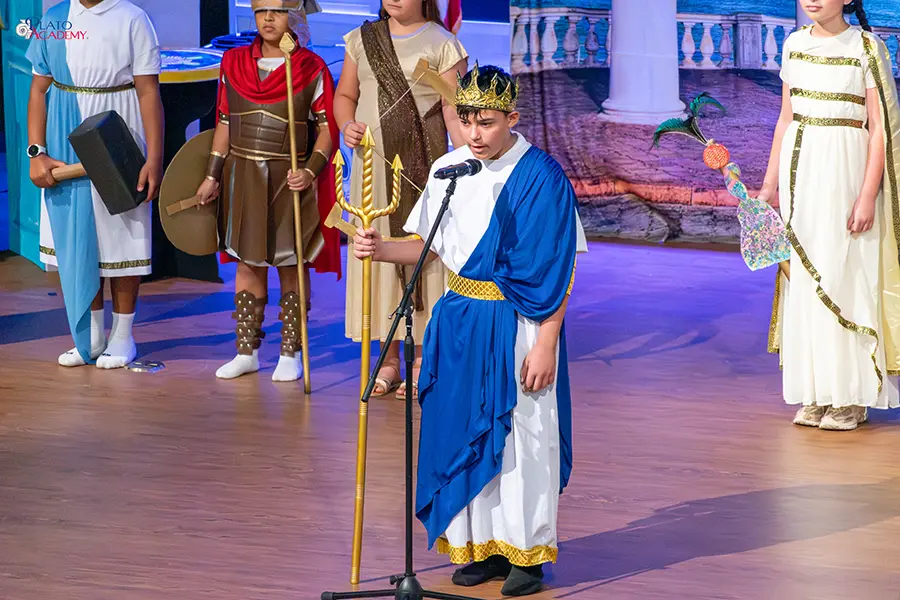
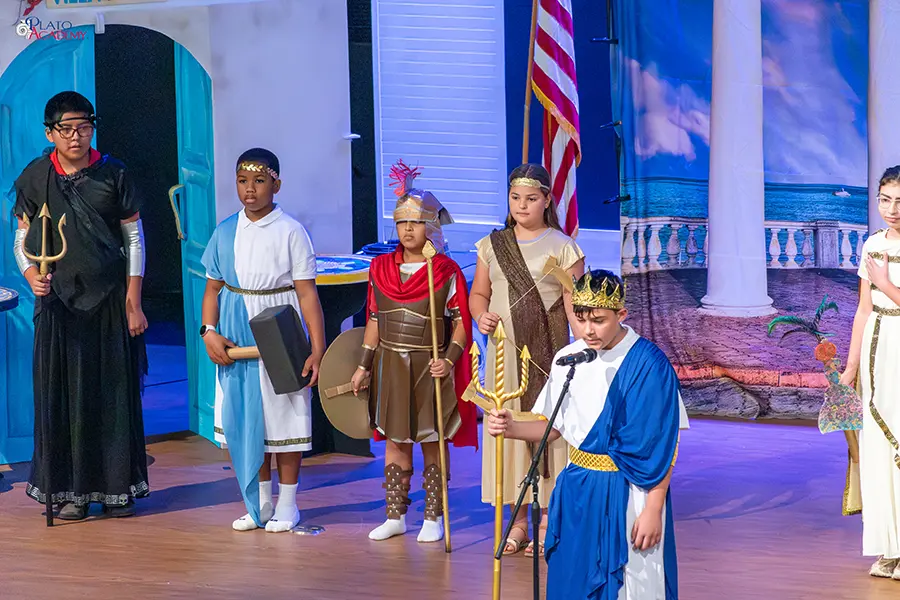
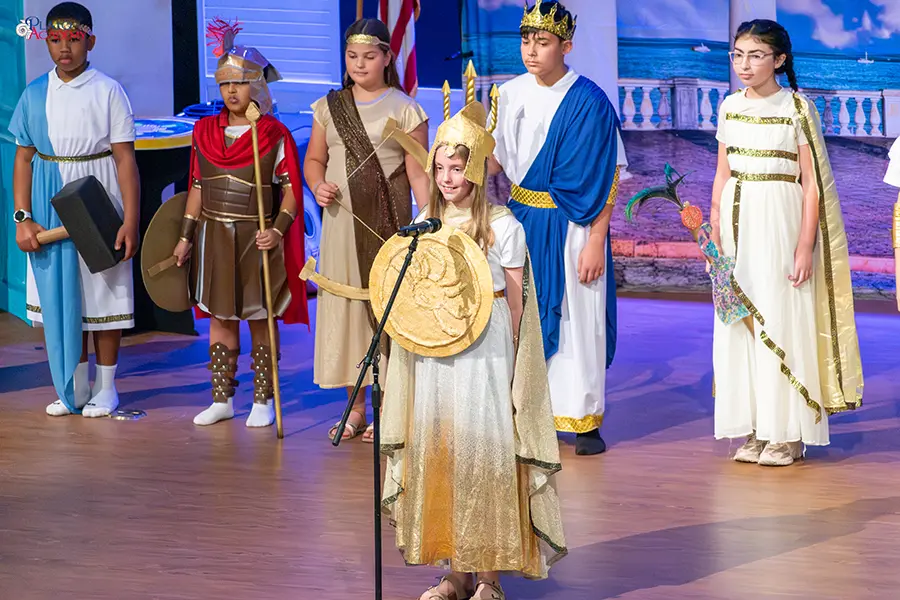
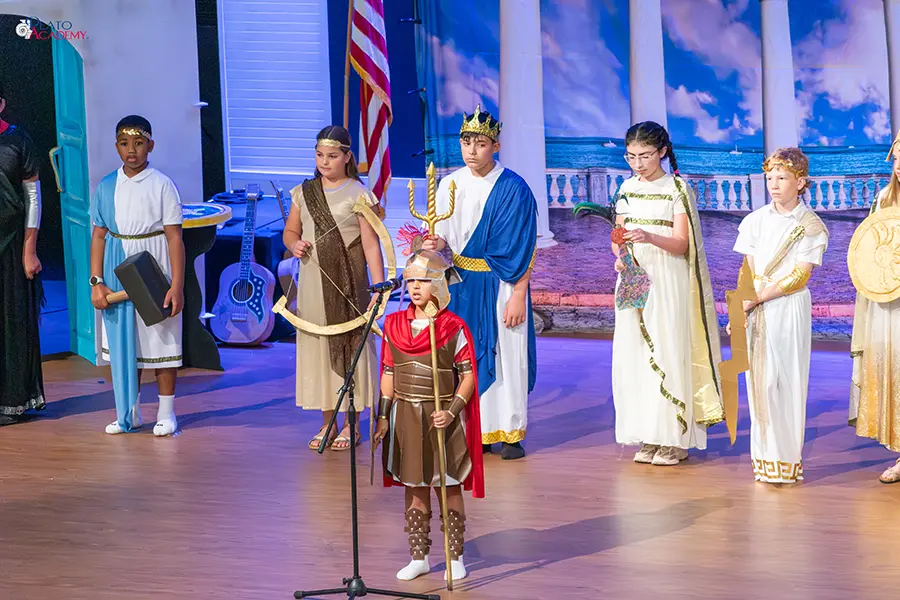
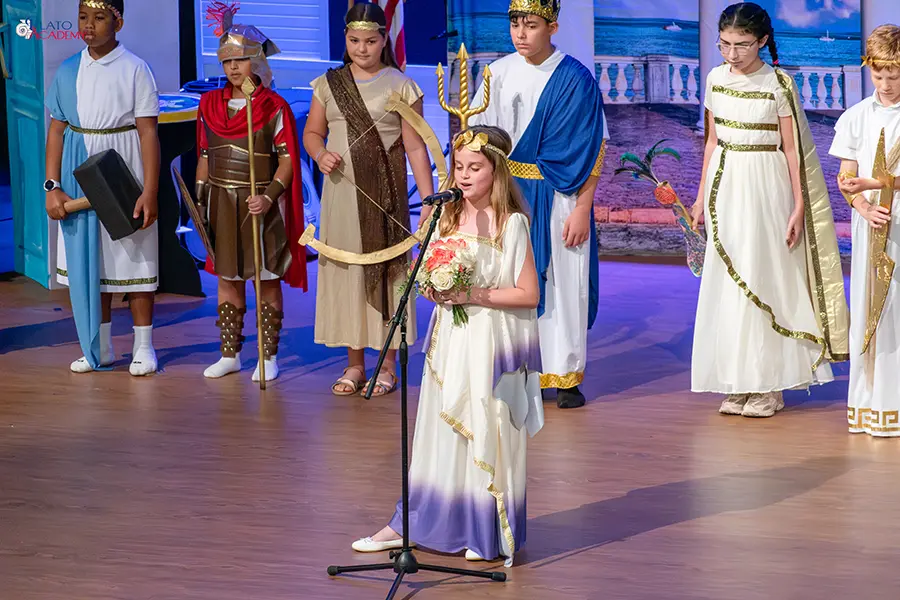
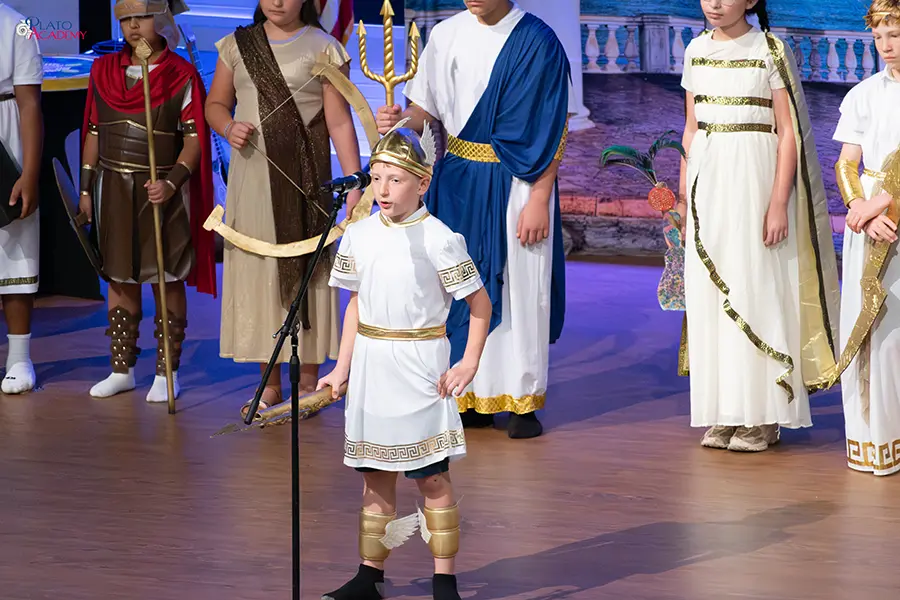
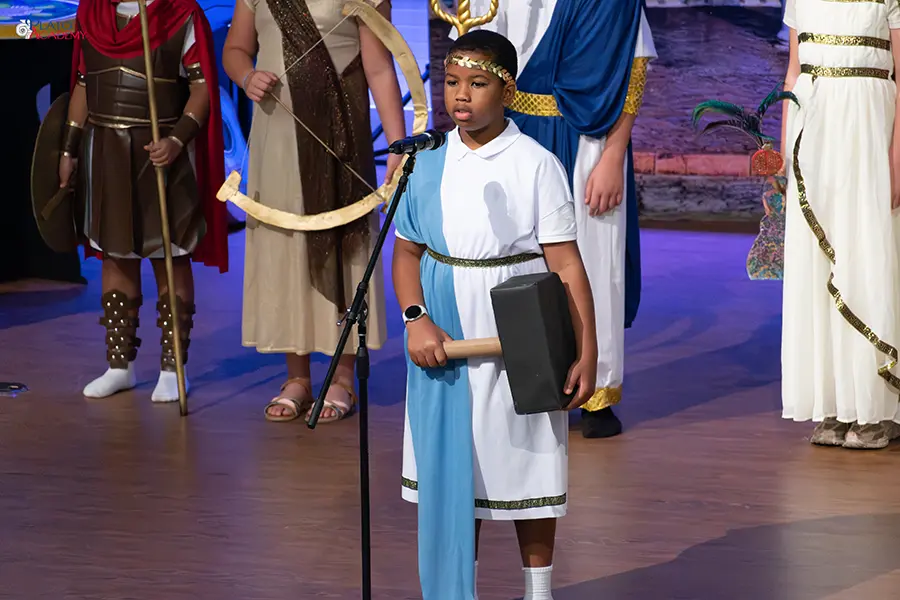
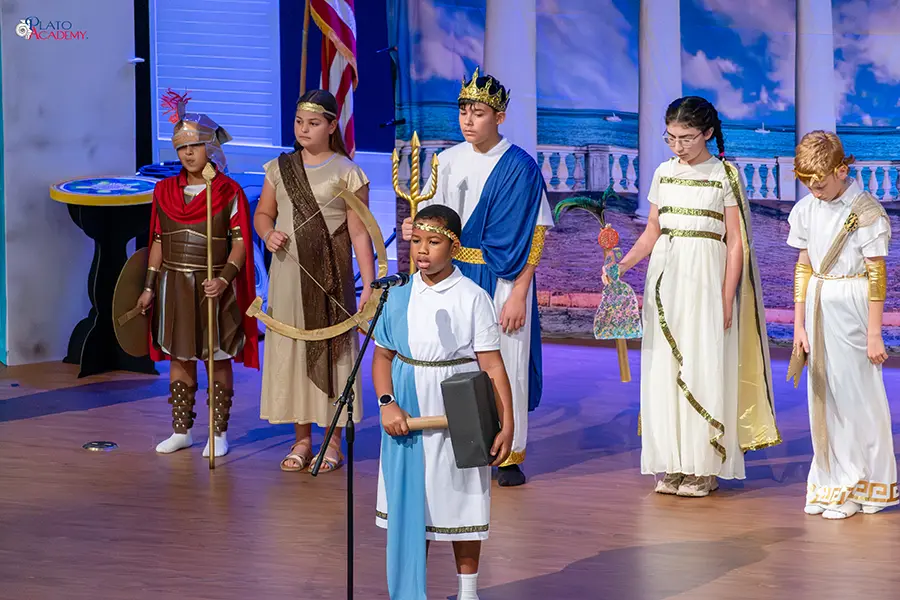
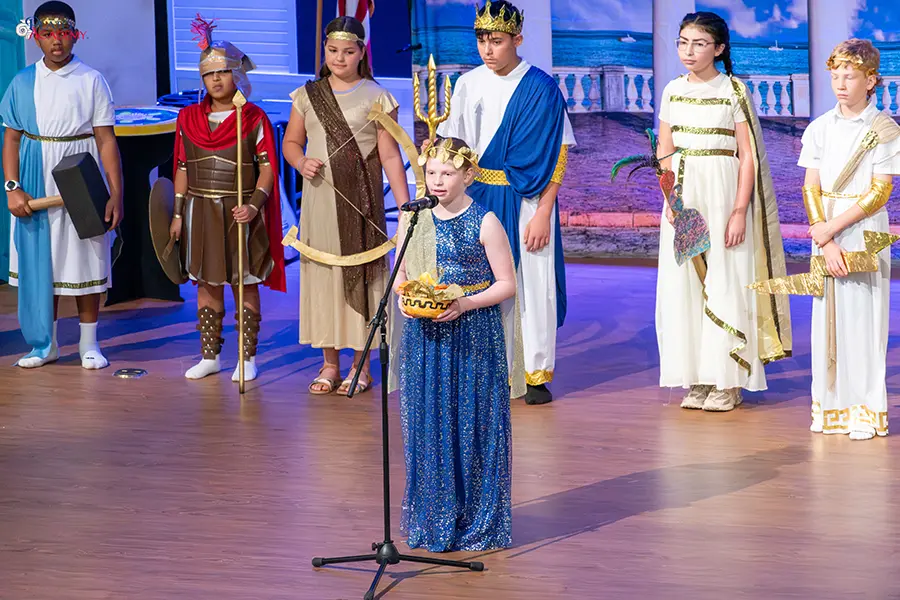
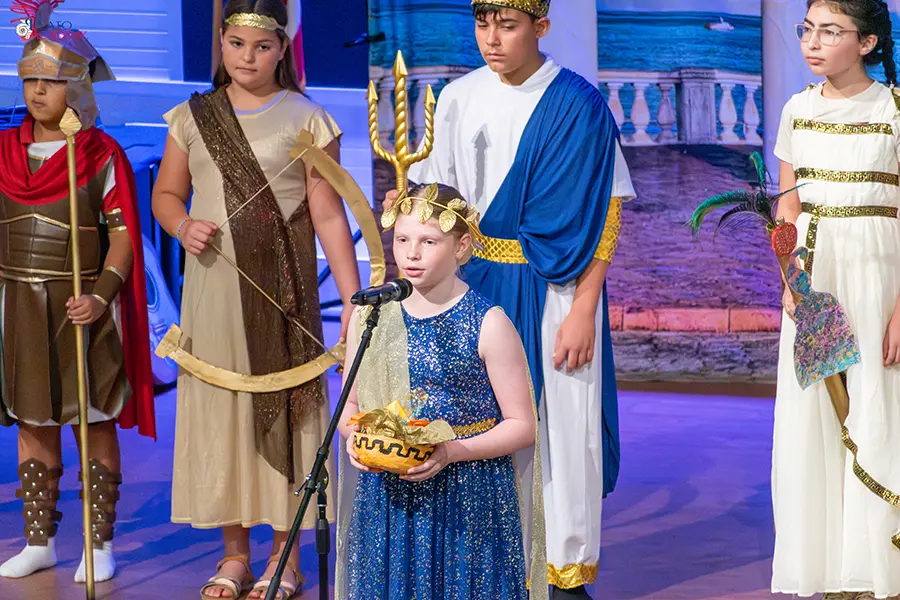
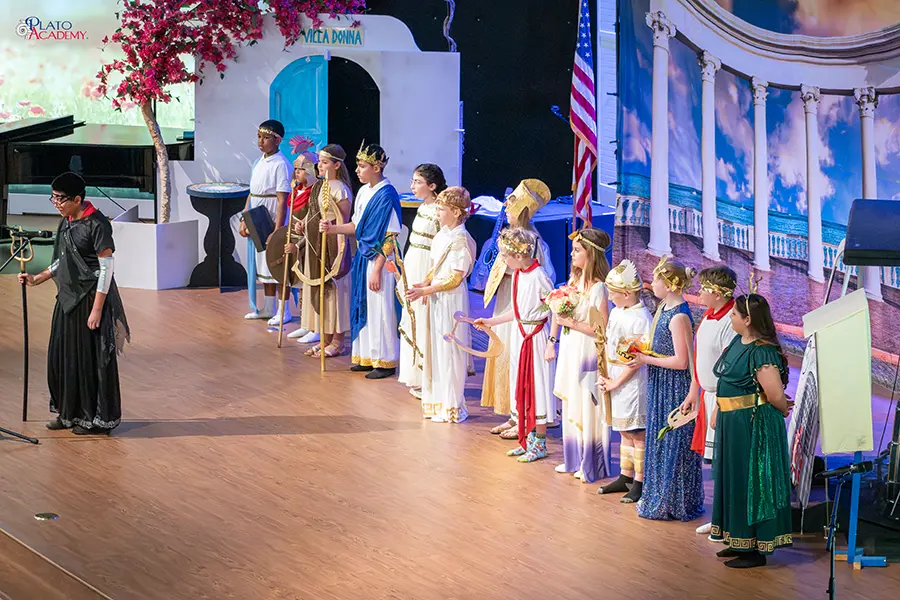
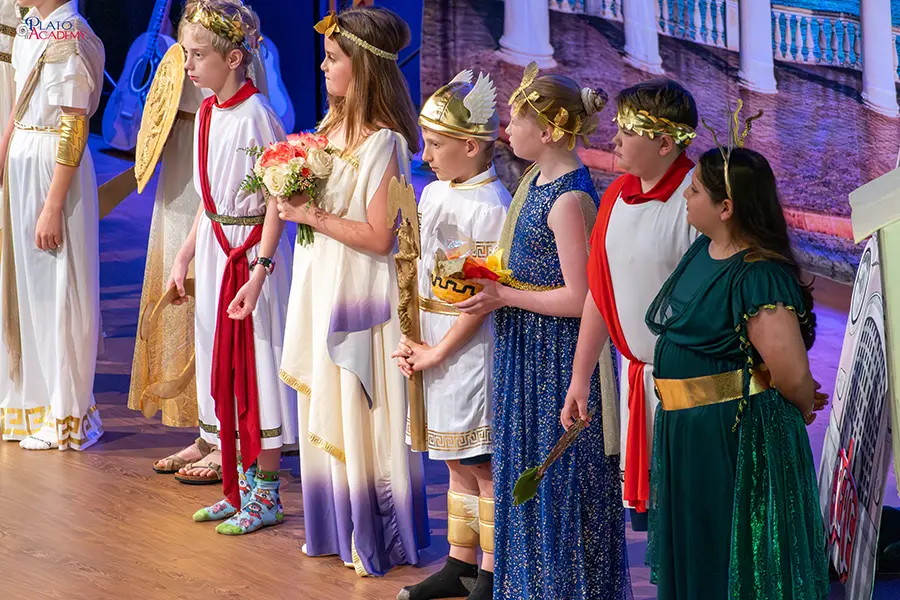
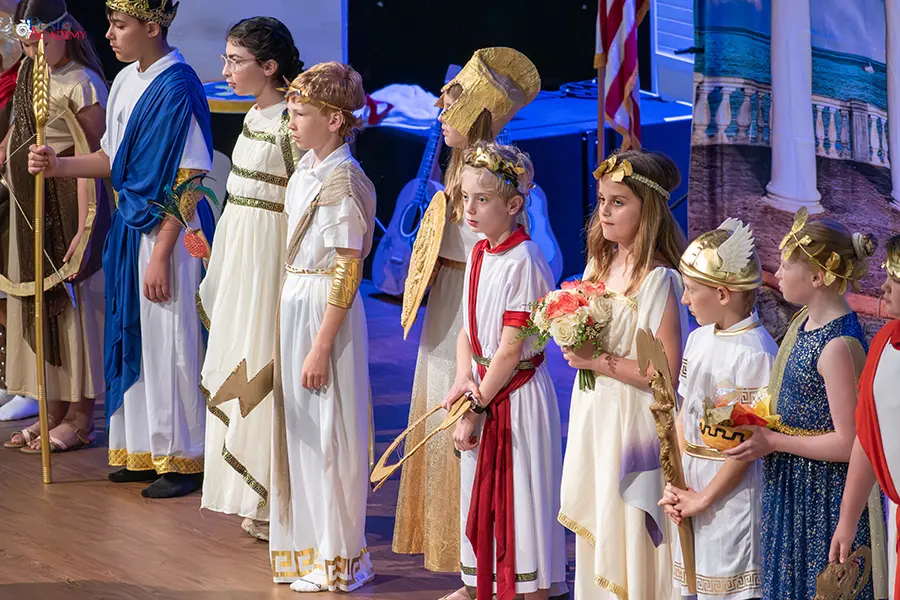
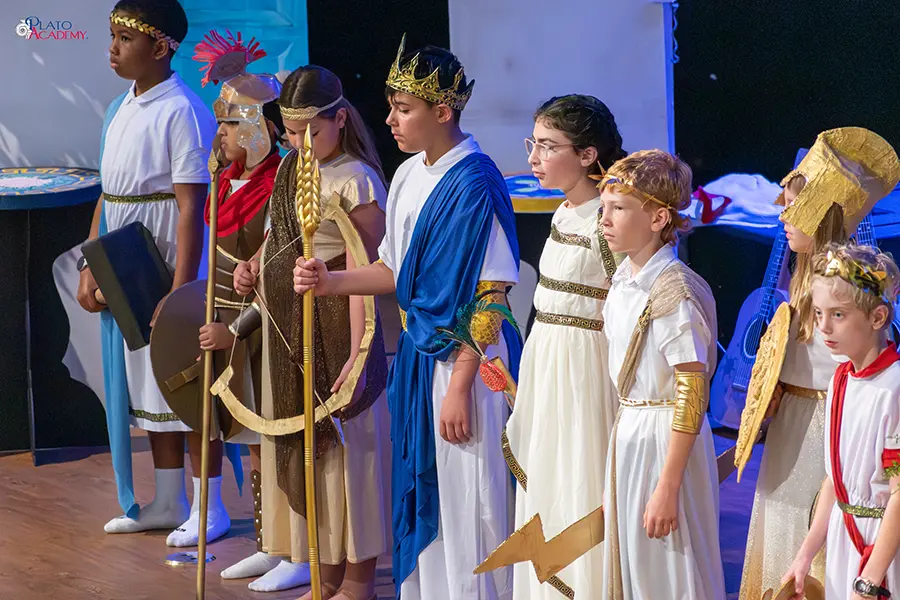
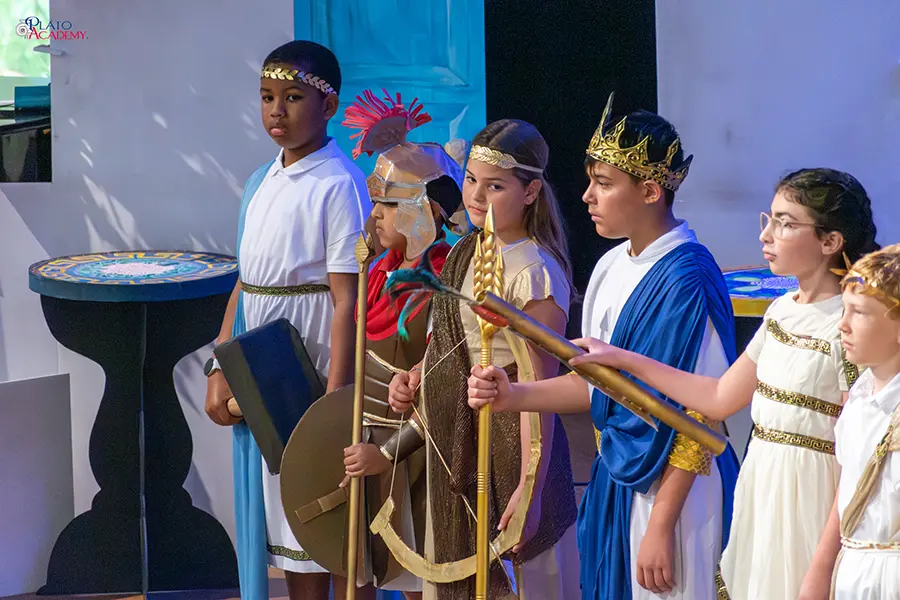
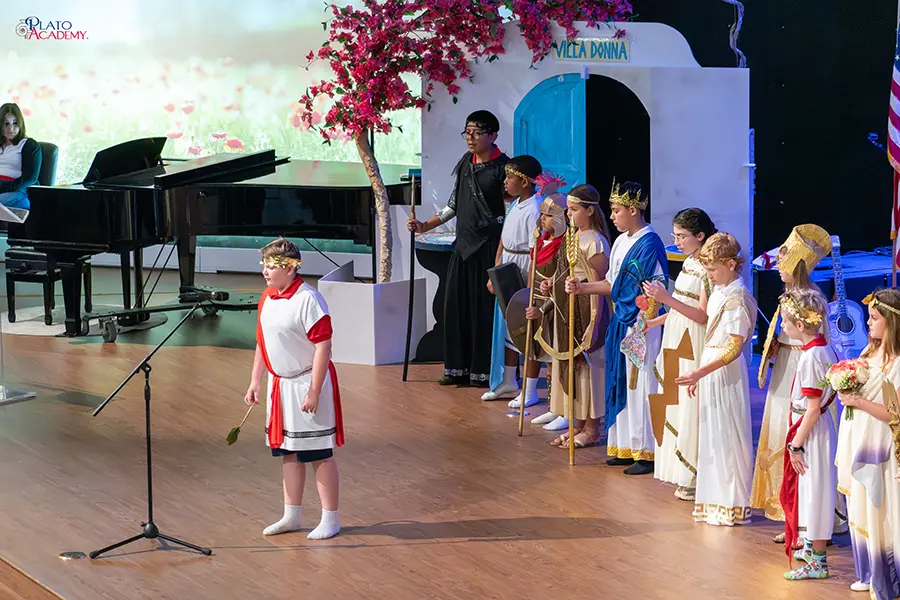
Then came the middle schoolers, who brought down the house with a theatrical production of “Mama Mia,”which included songs in Greek. The choice was deliberate and effective: a globally recognized pop musical reinterpreted through the Greek language, landing somewhere between cultural pride and sheer fun.
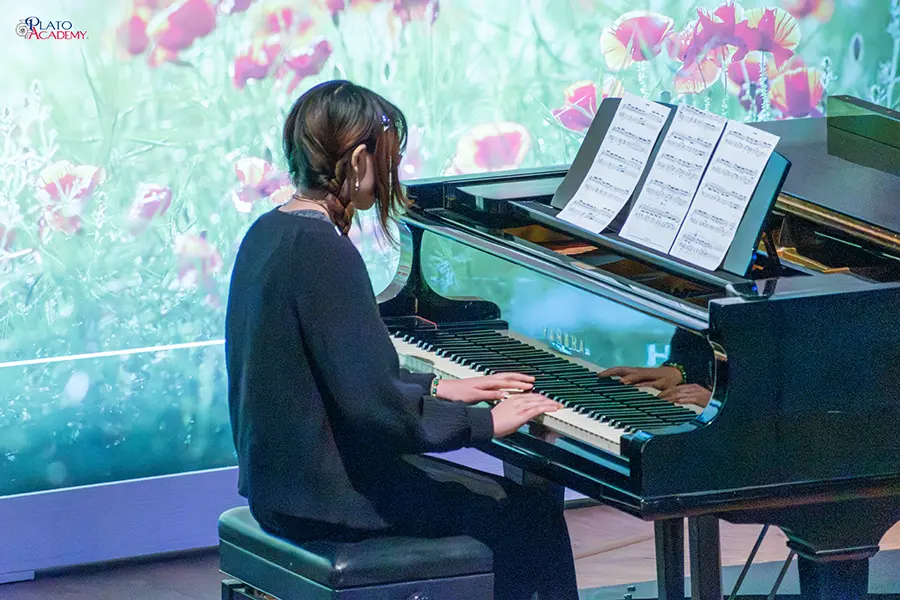
The auditorium portion of the program was shaped by the dedicated work of Mrs. Chrysa Kapnogiannis, Mr. Giavaras, and Ms. Tina Papagiannis, three teachers whose preparation made the whole event run with the kind of polish that audiences often take for granted.
The Schoolyard: Where the Dances Came Alive
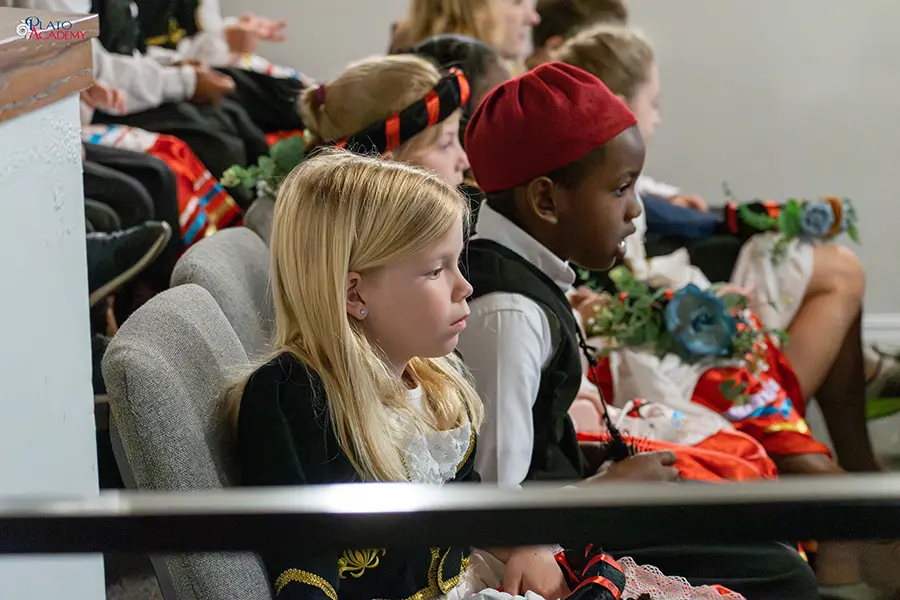
The second half of the celebration moved outdoors, and the energy shifted accordingly. Under open sky, multiple groups of younger students appeared in traditional Greek folk costumes representing different regions of Greece, each group performing a distinct regional dance. The variety was intentional and the dances made that geography visible.
Music coordinator and school music teacher Mr. Alfonso kept the rhythm and flow of the outdoor performances moving with precision.
The event closed with a group of boys performing the zeibekiko, a solo-rooted improvisational dance with deep roots in Greek working-class culture. Watching students take on a dance that demands presence, confidence, and a certain weightiness of spirit was a fitting close to a busy festival.
Experiencing Greek Food
Two food trucks rounded out the outdoor experience in a way that kept the cultural theme grounded and delicious. “Meli” (meaning “honey” in Greek) offered loukoumades (Greek-style donuts) and coffee. “The Greeks” truck served Greek cuisine meals, giving families and visitors a chance to eat well while the music was still in the air.
A Museum on Campus
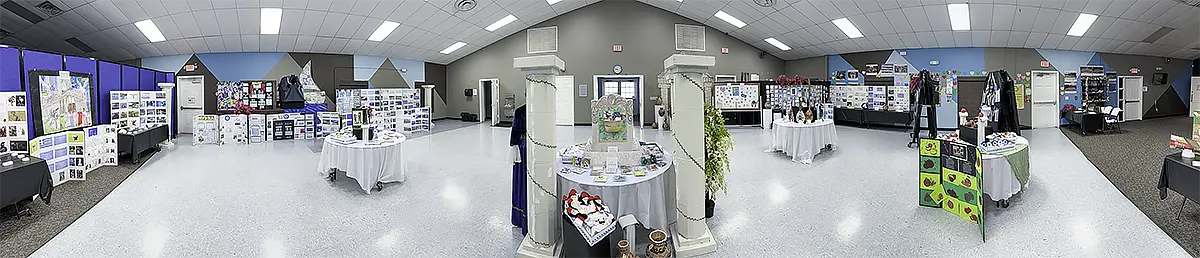
Perhaps the most quietly impressive element of the entire day was the transformation of the school cafeteria into a student-built museum of Greek civilization.
Visitors walked through charcoal drawings and visual art made by students, alongside detailed projects on ancient Greek architecture, mythology, geography, and history. The three-dimensional work stood out in particular: hand-built paper models of Greek temples, and Greek pottery crafted from papier-mache, demonstrated a level of craft that goes well beyond a poster board and a printer.
Scattered throughout the space were pomegranate keepsakes, one of the more culturally layered items on display. The pomegranate holds a long and significant place in Greek tradition. In Greek mythology, it is tied to Persephone and the cycle of the seasons, but in everyday Greek culture, the fruit is a symbol of prosperity, fertility, and good fortune. It is a common practice in Greece to hang a pomegranate at the entrance of a home at the start of the new year, sometimes breaking it on the threshold to release its seeds and invite abundance inside. The student-made versions carried that same spirit of welcome and hope.
Good luck charms and student-written Greek recipe books completed the picture, a collection of objects that crossed the line from school project into something genuinely worth looking at.
Greek Independence Day, celebrated on March 25th and honored at school this year, on March 13th, marks the 1821 uprising against Ottoman rule, a moment Greeks around the world treat with the gravity of a founding story. At a school in Tarpon Springs, a city with one of the largest percentage of Greek-American residents in the United States, that story is not abstract. It lives in the families, the language classes, the church down the road, the teachers and school families that bring events like this one, to life.